Artist interviews often appear as support material. They introduce an artist, promote a project, or explain an exhibition. These uses are helpful. But they can also make interviews predictable.
Many interviews follow the same pattern. The artist describes their background. They explain their inspiration. They say what viewers may take from the work. This format gives basic information. But it often leaves the deeper structure of the practice untouched.
A stronger artist interview can do more. It can become a method for understanding artistic practice. It can show how an artist thinks through form, material, memory, and experience.
This question matters more in digital space. Many viewers now meet art online before they see it in person. The National Endowment for the Arts reported that 75 percent of U.S. adults took part in the arts through electronic or digital media in 2022. By comparison, 48 percent attended at least one arts event in person (National Endowment for the Arts 5). This data does not mean online viewing replaces physical exhibitions. It shows that digital viewing is now a major part of art experience.
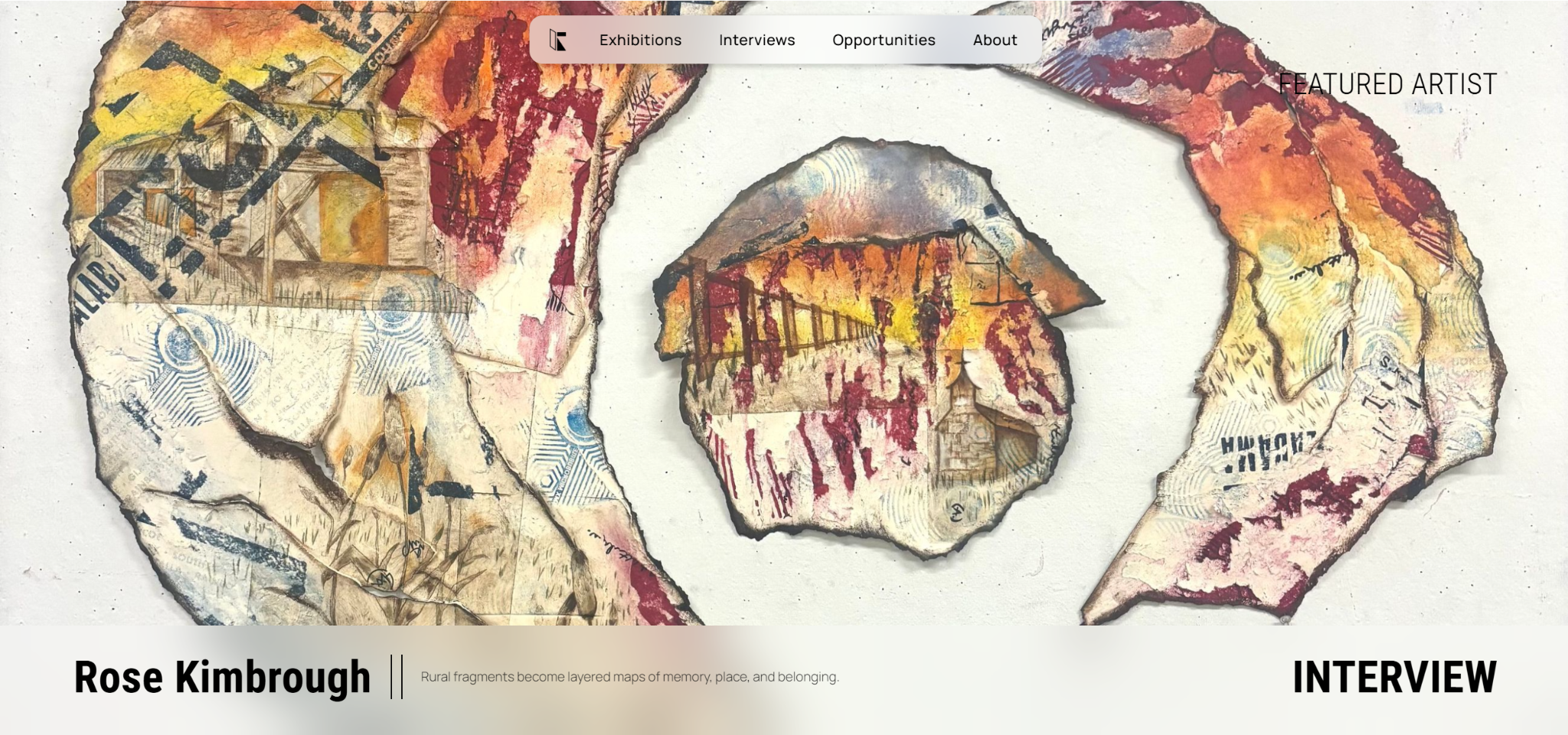
So the question is not only how art can be displayed online. The question is also how art can be understood online. Artist interviews can help build that understanding.
An interview gives artists room to unfold their thinking. A caption can name a work. A statement can frame a project. But an interview can move across process, doubt, memory, and choice. It can show how an artwork was made. It can also show why certain decisions matter.
The quality of an interview depends on the questions. A general question often gives a general answer. “What inspires you?” may work in some cases. But it can reduce a complex practice to a simple story. A better question begins from the work itself.
For example, an interviewer can ask about a recurring image, material, or gesture. The interviewer can also ask how that element changes across several works. This kind of question gives the artist a clearer path. It asks the artist to think through the work, not around it.
At Rexhibit, this principle shapes our interview process. We usually begin by reading the artist’s artwork statements. We then study the images and identify repeated ideas. The questions come from those patterns. They do not come from a fixed template.
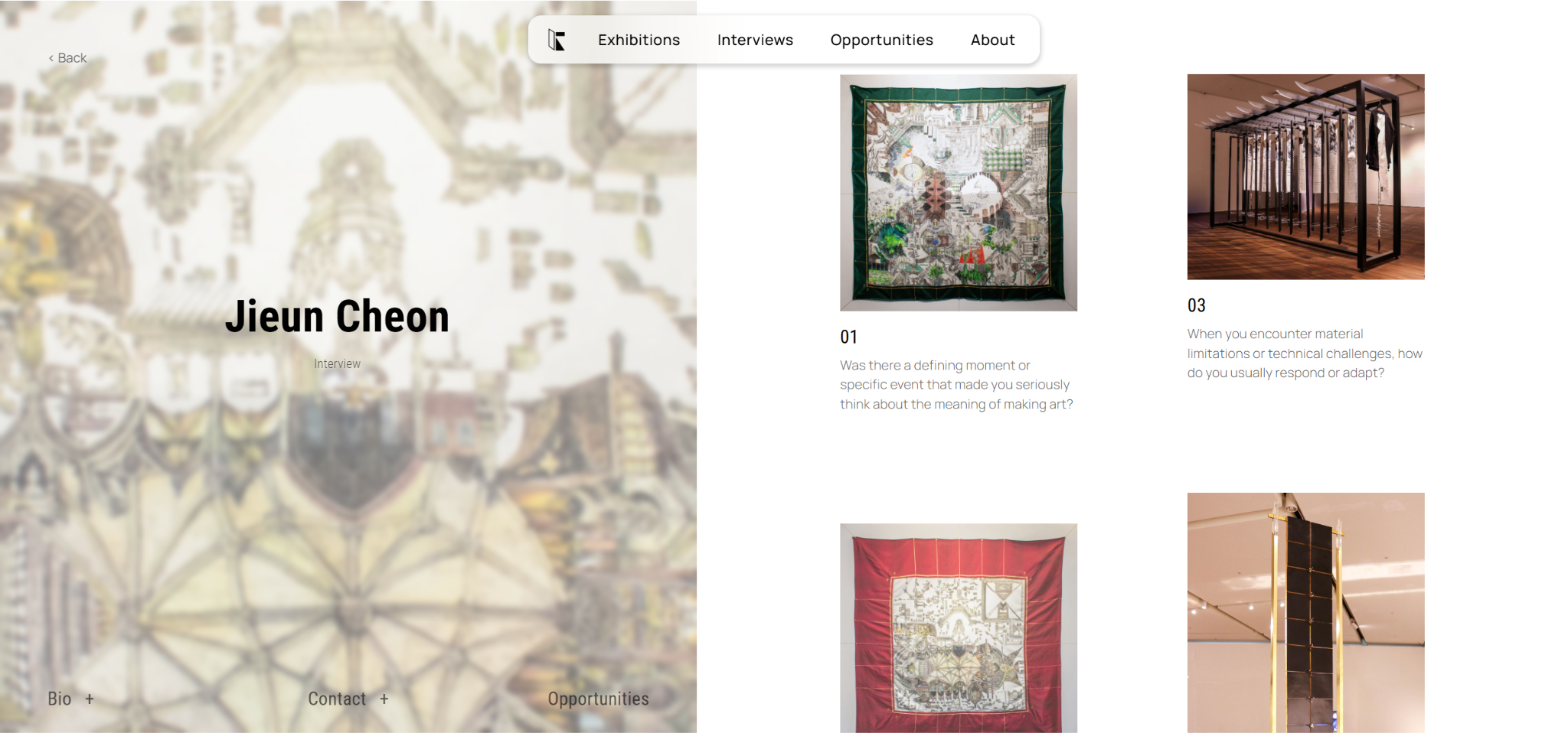
This structure helps the interview follow the work’s own logic. In our current approach, most questions connect art and lived experience. These questions ask how memory, emotion, place, daily thought, and relationships enter the work. Other questions focus on the artist’s working philosophy. These questions ask about values, material choices, audience, and artistic responsibility.
A strong interview question can also have educational value. It does not only ask the artist to explain a finished idea. It can guide the artist back to the motives behind the work. This process is close to motivation-oriented reflection. It asks why a form returns. It asks why a material feels necessary. It asks why one image continues to matter.
Through these questions, the artist may examine their working philosophy more clearly. The interview can also create new thought. It can help the artist notice a hidden pattern, a repeated concern, or a future direction. In this sense, the interview is not only a record. It is also a space for thinking.
This balance is important. An interview can become too focused on biography. In that case, the artist’s life may overwhelm the work. An interview can also become too abstract. In that case, ideas may feel detached from making. A strong interview needs both life and thought.
Asking about life does not mean turning the artist into a personal story. It means asking how experience becomes form. Memory can shape composition. Emotion can shape rhythm. Pressure can shape material choice. Daily observation can shape a visual system.
These links are not always visible in an image. This is especially true online. A screen can flatten scale, texture, and physical presence. Because of this, language becomes more important. It can help viewers stay with the work for longer.
This is where the interview becomes part of interpretation. It does not tell viewers what to think. It gives them a way to look more carefully. It also gives them language for what may first appear silent or unclear.
Artist interviews also have archival value. The Smithsonian Archives of American Art began its Oral History Program in 1958. The program has produced more than 2,500 oral histories with artists and art world figures. The Archives describes these interviews as records of voices, memories, working methods, and professional worlds (Archives of American Art). This example shows that interviews can outlive promotion.
This archival value matters for many artists. Artists often understand their work before they can fully explain it. Their knowledge may begin through intuition, repetition, and material contact. A careful interview gives that knowledge a structure. It helps artists name what they already practice.
The interview serves viewers and artists at the same time. For viewers, it creates access. It helps them move beyond the visual surface. For artists, it creates reflection. It gives them space to question and clarify their own practice.
This function is useful in online exhibitions. A physical exhibition can use space, movement, scale, and material presence. An online exhibition works through image, text, sequence, and interface. In this setting, language is not just extra context. It becomes part of the viewing structure.
Research on virtual museums points to a related idea. Zhenjie Zhao studied interactive guiding questions in a virtual museum setting. The study used an online experiment with 150 participants. Zhao reports that guiding questions encouraged browsing and improved content understanding (Zhao). This study does not prove that artist interviews work in the same way. But it supports a useful point. Questions can shape attention in digital space.
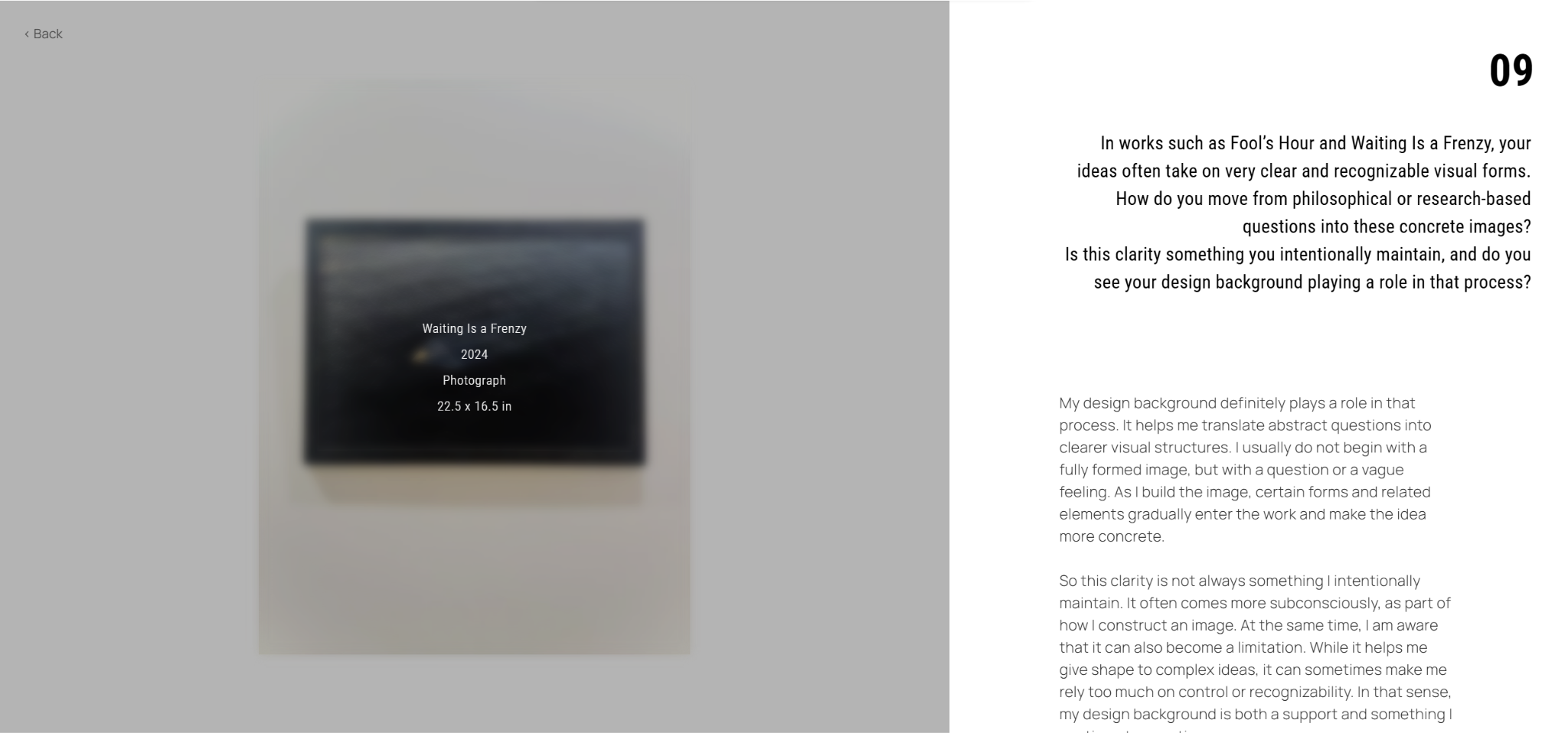
Rexhibit treats artist interviews through this wider lens. We see them as part of the exhibition structure. They sit beside artwork statements, Rex Statements, keywords, and images. These parts work together. They create several paths into one practice.
Promotion is still part of this process. Interviews help artists reach audiences. They make the work more visible. But visibility is not enough. A work also needs careful reading, precise questions, and context.
A strong artist interview does not simplify a practice. It gives the practice a clear structure. It helps viewers see how an artist thinks, remembers, doubts, and decides through the work. In this sense, the interview becomes part of the exhibition itself.