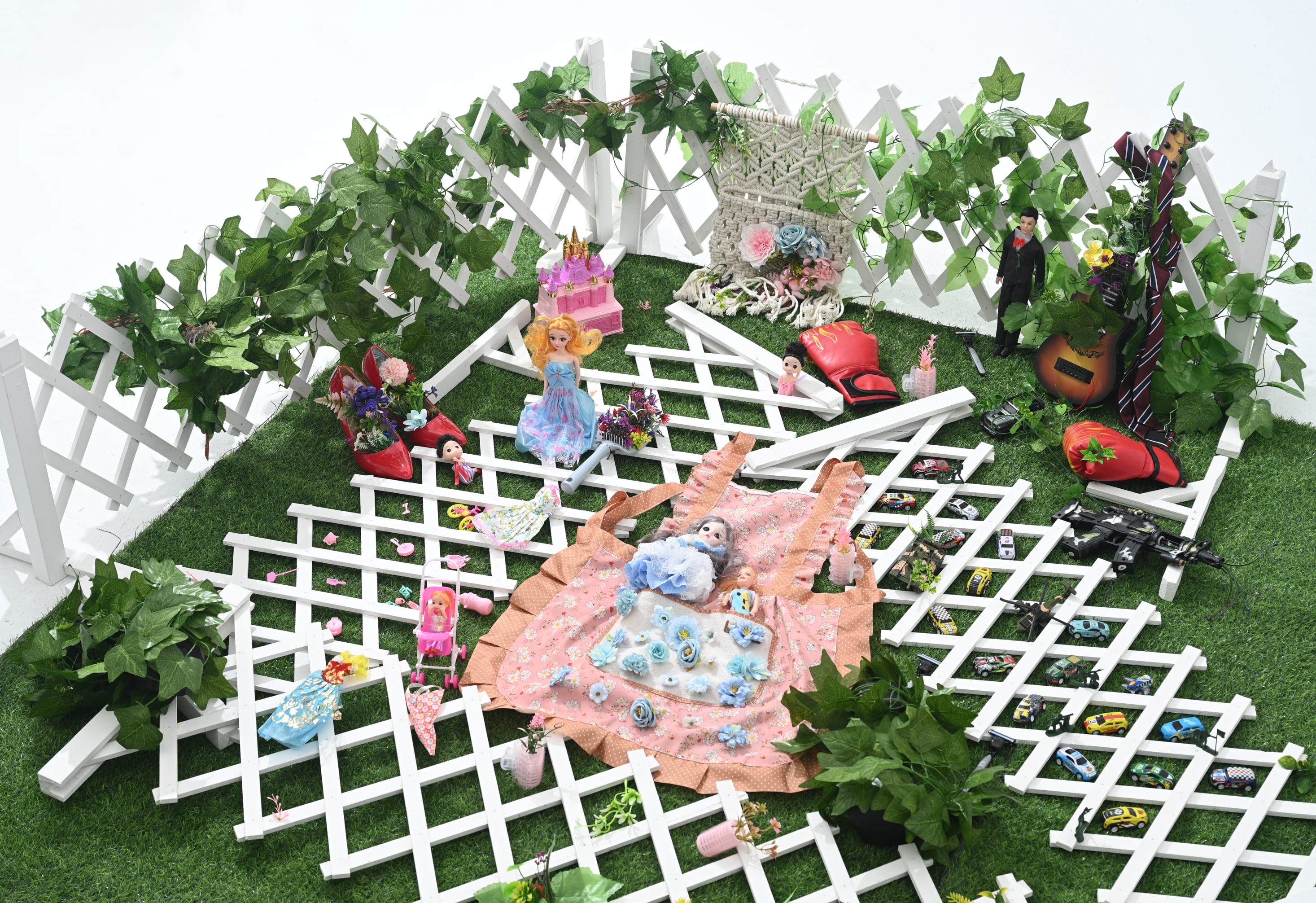
Eden of Gender critiques the preferential treatment of boys and suppression of girls in East Asian families, exposing the cultural constructs that shape identity. A grass-covered surface and collapsed grid fence symbolize the breakdown of rigid norms, while symbolic “male” and “female” objects reflect tools of socialization and binary stereotypes. At the center, a modified apron holding a Barbie doll directly critiques the domestic roles imposed on women. Plant elements growing through these objects evoke ecosystems’ natural diversity, symbolizing the fluidity of gender and the possibility of liberation beyond binaries.
This installation reimagines the “Garden of Eden” not as purity or harmony, but as a site of critique, resilience, and inclusivity. Critiques the preferential treatment of boys and suppression of girls in East Asian families, exposing the cultural constructs that shape identity. A grass-covered surface and collapsed grid fence symbolize the breakdown of rigid norms, while symbolic “male” and “female” objects reflect tools of socialization and binary stereotypes. At the center, a modified apron holding a Barbie doll directly critiques the domestic roles imposed on women. Plant elements growing through these objects evoke ecosystems’ natural diversity, symbolizing the fluidity of gender and the possibility of liberation beyond binaries.
This installation reimagines the “Garden of Eden” not as purity or harmony, but as a site of critique, resilience, and inclusivity.