Self-Perception
2026, Acrylic on canvas, 30 × 40 in
Dark, branching lines and pale, rounded shapes overlap against a pink-orange background. Some resemble plants or parts of a body, but their forms are difficult to identify. Different areas of the painting suggest different images. Where we look first affects what we notice. One viewer may see a plant, while another sees something entirely different. Recognition happens as we try to connect these unfamiliar shapes with things we already know. Luo compares this process to the way we understand ourselves. We often describe who we are through our personalities, memories, and experiences. We assemble these different parts into an idea of ourselves, even though no single part tells the whole story. Just as we may discover new shapes when looking at the painting again, we may also notice different sides of ourselves over time. Our understanding of who we are is never completely fixed.
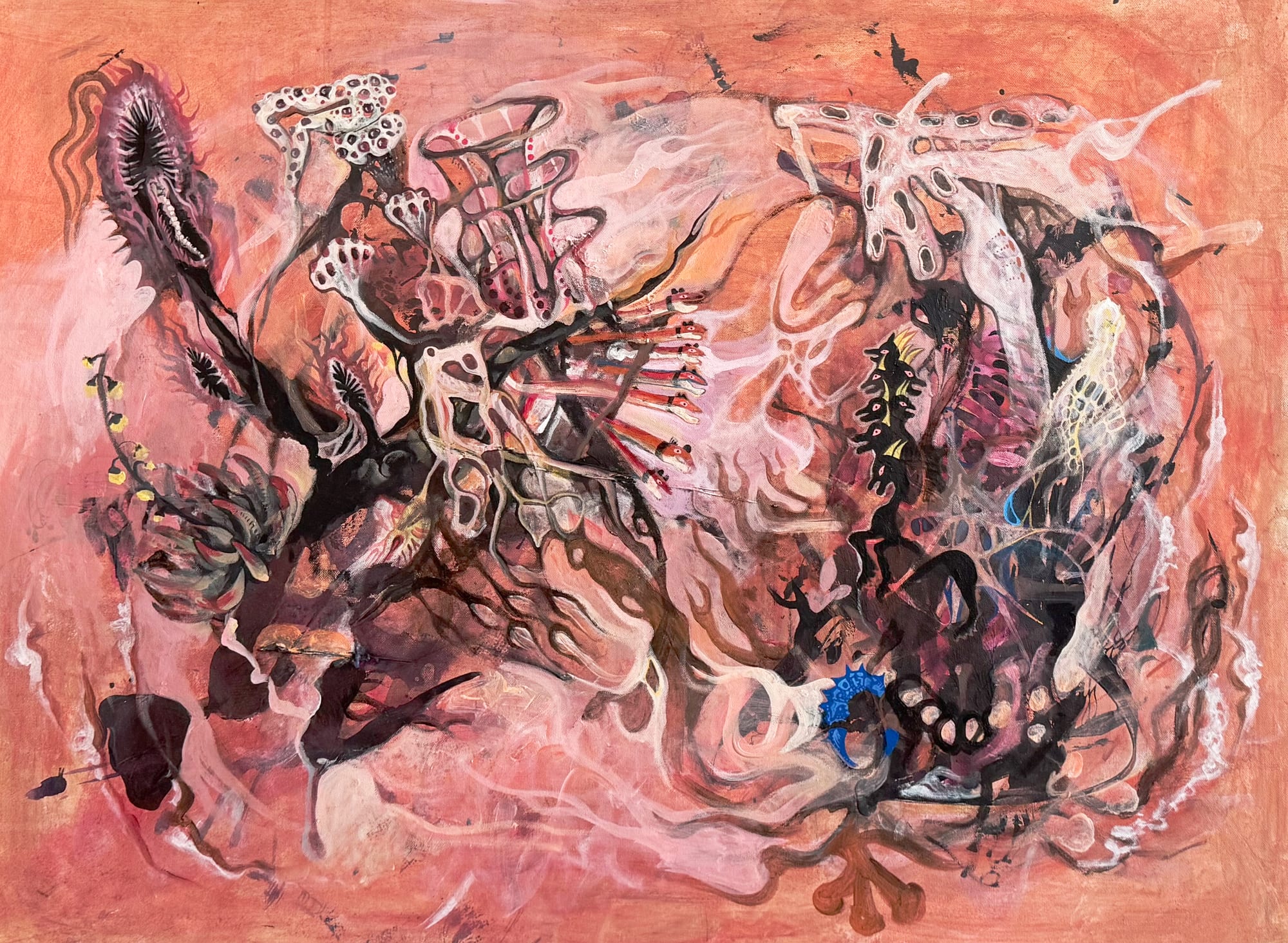
What a viewer finds depends on where the eye enters and what it tries to recognize. The painting is about that act of looking, and how we read ourselves the same way, assembling a self out of parts that never fully settle.
From the artist >
< From Rexhibit
Look   ✚
Look
Where we look first affects what we notice. One viewer may see a plant, while another sees something entirely different.
Recognition   ✚
Recognition
Recognition happens as we try to connect these unfamiliar shapes with things we already know.
Assemble   ✚
Assemble
We assemble these different parts into an idea of ourselves, even though no single part tells the whole story.

Keyword

Statement

Image

Catalog

For the best experience, please switch to a larger screen.
‍
‍
We're currently optimizing this section for mobile — improved viewing will be available in future updates.

Self-Perception
Acrylic on canvas
30 × 40 in, 2026
From Rexhibit
Dark, branching lines and pale, rounded shapes overlap against a pink-orange background. Some resemble plants or parts of a body, but their forms are difficult to identify. Different areas of the painting suggest different images. Where we look first affects what we notice. One viewer may see a plant, while another sees something entirely different. Recognition happens as we try to connect these unfamiliar shapes with things we already know. Luo compares this process to the way we understand ourselves. We often describe who we are through our personalities, memories, and experiences. We assemble these different parts into an idea of ourselves, even though no single part tells the whole story. Just as we may discover new shapes when looking at the painting again, we may also notice different sides of ourselves over time. Our understanding of who we are is never completely fixed.

From the Artist
What a viewer finds depends on where the eye enters and what it tries to recognize. The painting is about that act of looking, and how we read ourselves the same way, assembling a self out of parts that never fully settle.
Contact us
Newsletter
Thank you! Your submission has been received!
Oops! Something went wrong while submitting the form.
© 2026 Rexhibit. All rights reserved.
Brooklyn, NY
Menu
Contact us
Newsletter
Thank you! Your submission has been received!
Oops! Something went wrong while submitting the form.
© 2026 Rexhibit. All rights reserved.