
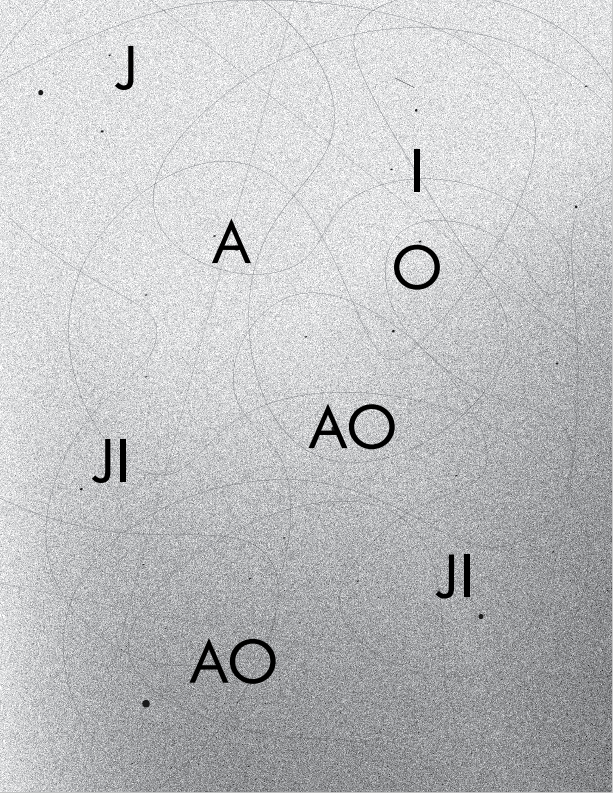
On July 25, 2026, Rexhibit hosted its first Artist Talk with Shanghai-based artist Vivienne Yu Zhang. Near the end of the conversation, she wondered aloud whether her presentation had been “a little scattered.” She had moved from photography to architecture, from commercial interiors to poetry, writing, and philosophy. Her photography, architecture, and writing remain distinct media, yet the ways she perceives and thinks are not divided by those categories. Having listened to the full talk, I came to see this apparent looseness as a revealing structure. Vivienne is not simply shifting between unrelated professions. In her practice, literary images can become spatial proposals; the logic of architectural material maps can develop into a photographic subject; and photographs can acquire a renewed physical presence through text, paper, and installation. She described this approach as “hunting architecture from its periphery.” Her disciplines do not merely sit beside one another. They continually supply one another with sensations, methods, and constraints.
During the talk, Vivienne described her work as a form of “overflow.” An image, a phrase, or a feeling gathers until it spills naturally into photography, writing, or space. The description suits her practice, but perception-driven creation is hardly unusual. The more revealing question is what happens after the overflow: how she selects, structures, and develops it into a work. Most artists can trace their practice to a moment, form, or emotion that demanded attention. What distinguishes one practice from another is how that initial impulse is handled—what is pursued, which medium is chosen, and how a private sensation becomes available to another viewer. Vivienne’s particularity lies less in the intensity of her intuition than in the disciplined system she has built around it.
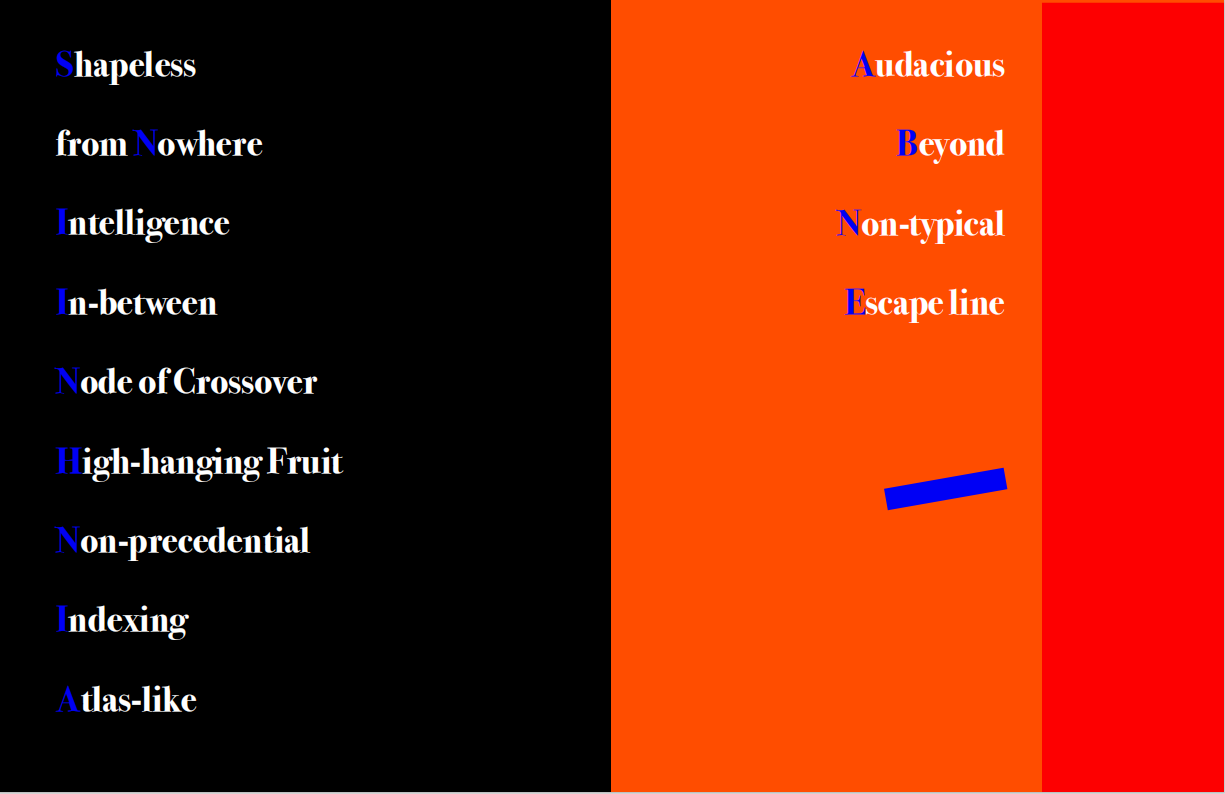
JiaoJiao is central to understanding Vivienne’s practice. It is not an alter ego but a self-invented unit of attention. She describes it as a projection, a floating position that moves among things, and an observational tool that began in architecture before expanding outward. The vocabulary she associates with JiaoJiao reveals the double movement of her work. Shapeless, Flow, Floating, and Chaos suggest unstable, unformed perception; Intelligence, High-hanging Fruit, Indexing, and Atlas-like invoke judgment, difficulty, classification, and the organization of knowledge. These terms are not opposites. Intuition initiates the work, while reason helps her decide which sensations deserve to be developed and keeps the first impulse from being exhausted at the moment of exposure. In Art as Experience, John Dewey distinguishes immediate emotional discharge from artistic expression: feeling becomes sharable only when it is reorganized through material, medium, and form.[1] Vivienne’s photography follows this movement. Taking the picture is only the beginning. Cropping, selection, sequencing, naming, and the relation between image and text gradually turn an indistinct sensation into a work.
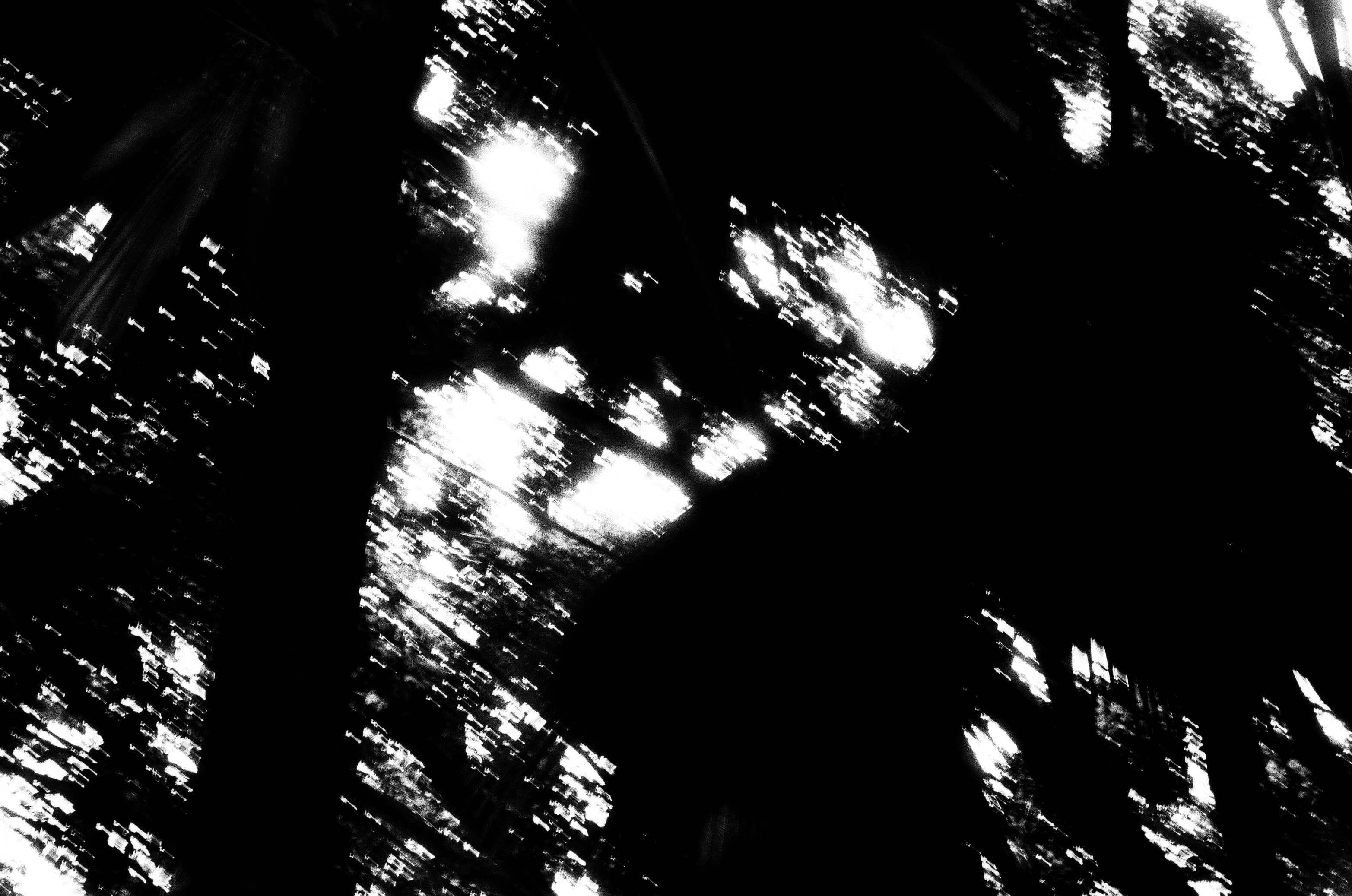
This is why I would describe her practice through a deliberate contradiction: it begins in impulse and proceeds through discipline. By discipline, I do not mean an external doctrine or a fixed style, but the formal demands she sets for herself. Vivienne can leave meaning unresolved without suspending judgment. When she says that “tomorrow, stone may become nostalgia,” she is not arbitrarily substituting one meaning for another. “Stone” is first a name that people give to a thing. Once that name is held in suspension, form, density, memory, and personal experience can enter into new relations. The stone remains, but “stone” is no longer the only conclusion available to perception. She accepts multiple readings without assuming that every form is equally effective. Impulse keeps the work alive; discipline prevents it from remaining unworked private feeling.
Where Reason and Sensibility Do Different Work
This structure is closely tied to Vivienne’s concurrent roles as architect, designer, and artist. Architecture and commercial design also require intuition, but they cannot answer to intuition alone. A spatial idea must eventually become dimensions, materials, structures, lighting, and construction documents. It must also respond to site, budget, brand expectations, local culture, supply conditions, and the people who will use the space. A designer cannot stop at the point where something “feels right.” She must explain why a form is appropriate, whether it can be made, and how it will function in the world. During the talk, Vivienne described this part of her work as solving problems, coordinating different trades, making decisions, and taking responsibility for the final realization.
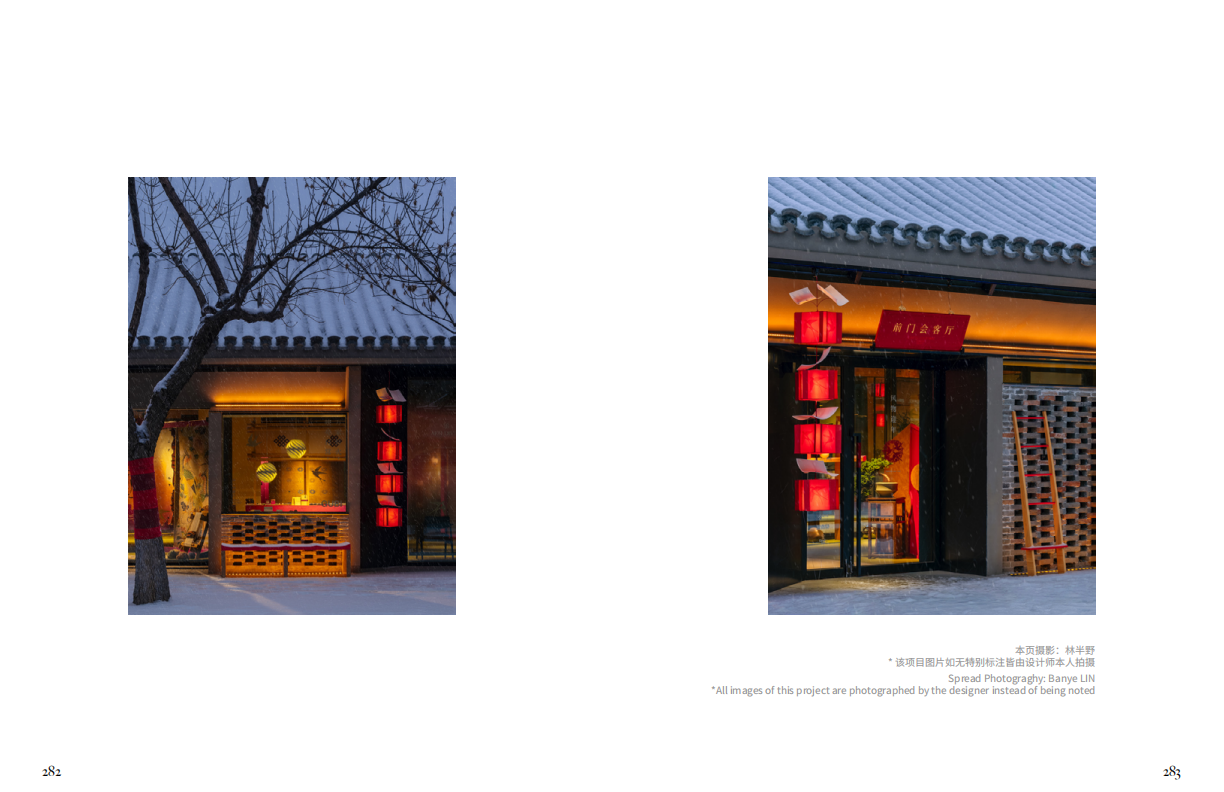
Donald Schön describes design as a “reflective conversation” between the maker and a specific situation. A designer does not first obtain a complete answer and then execute it mechanically. Materials, models, sites, and technical feedback continually reshape the problem, requiring each next decision to respond to what has already happened.[2] Vivienne’s Qianmen Livingroom project makes this process visible. On entering the site, she first noticed the rising and falling line of traditional Beijing roof tiles. The response was intuitive, but the curve then had to be abstracted into a visual language shared by lanterns, furniture, and display structures. It could not remain a decorative “Beijing symbol”; it also had to organize lighting, display, and movement through the space. Her Valentino Year of the Horse project similarly began with poetic imagery, then moved through brand initials, lighting structures, translucent materials, historical horse forms, and festive color. The poetry did not disappear. It had to pass through a series of practical decisions before it could occupy public space.
After looking through her website and work, I had planned to ask during the Q&A whether the roles of architect, designer, and artist ever came into conflict. By the time she finished speaking, however, the talk had already offered an answer. Vivienne describes her approach as “hunting architecture from the outside.” Rather than looking only within architecture for methods, she draws from literature, film, painting, and other art forms, then filters those references through personal experience and professional judgment before translating them into space. For her, disciplines remain distinct but continually permeate one another. She also noted that she does not want to follow only the established paths of architectural discourse. Encounters across fields give her other ways of sensing and entering architecture.
Precisely because design already carries so much practical responsibility, Vivienne can preserve photography as a comparatively open field of feeling. She does not need to photograph in order to complete a commission, nor must she prove that a stone, a reflection, or an indistinct surface serves a clear function. A photograph can begin simply with the desire to hold onto a moment and remain, for a time, without a predetermined outcome. Her multiple careers produce an unusual internal balance: much of the rational labor of solving problems takes place in design, while photography retains a more direct, private, and non-instrumental mode of attention.
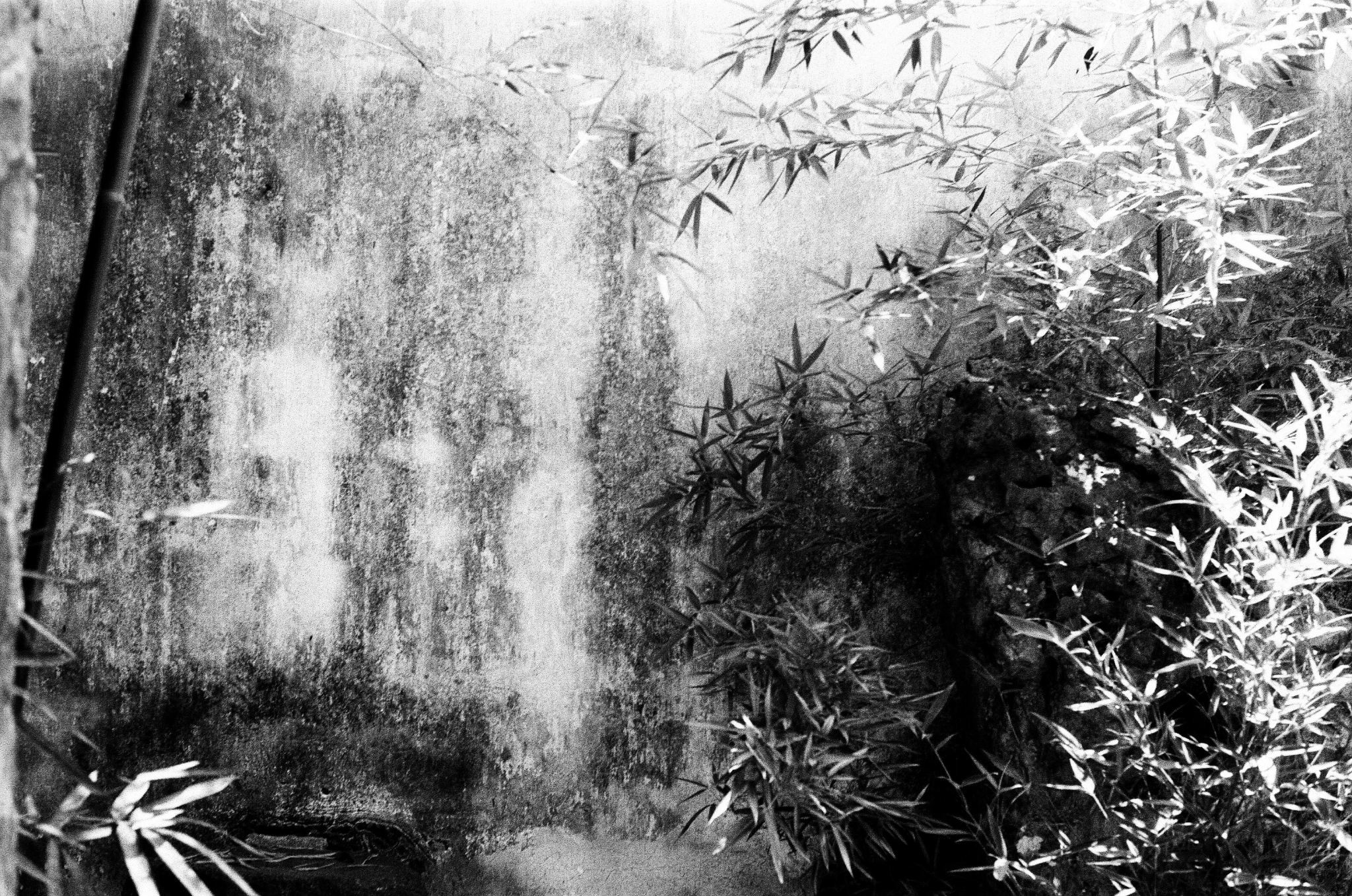
Yet this is not a simple division between rational design and emotional art. Vivienne’s design begins with images, poetry, and bodily perception, while her photography depends on exacting editing and a philosophical framework. The difference lies in what each practice asks feeling to do. Design must turn perception into a decision and carry it into reality; art can allow perception to remain partially unresolved. Her photography is not intuition alone. Reason appears in the selection, cropping, sequencing, and writing, but these operations do not rush to close the photograph around a single conclusion. Rather than fully merging reason and sensibility, she gives them different responsibilities.
"JiaoJiao" and Materials Without Names
As an architect and designer, Vivienne is trained to identify a material’s function, scale, and method of construction quickly. Through JiaoJiao, she can briefly interrupt that professional reflex. Instead of asking first what an object is or what it can do, she attends to how it appears.
During the Q&A, I linked this method to the Buddhist ideas of “formlessness” and “no-self.” To me, JiaoJiao resembles a capsule that allows the maker to step temporarily outside an established identity. The camera becomes another eye, loosening her habitual cognitive distance from the world. Vivienne does not identify as a Buddhist, but she acknowledged that this philosophy has worked on her subconsciously and that the Zen-like quality of the work is not entirely accidental. “No-self,” however, does not mean that the artist disappears. She still chooses what to photograph and remains drawn to beauty, nostalgia, sympathy, and dreams. What she suspends is not feeling, but the self’s priority as the center of explanation. JiaoJiao is not an emotionless objective viewpoint. It is a viewpoint that does not rush to judge.
Viktor Shklovsky argued that habit makes perception automatic. We learn to recognize an object instantly and, in doing so, cease to see it. Art, in his account, does not transmit the object more efficiently; it makes the familiar strange and lengthens the act of perception.[3] Vivienne’s Shimmering series works through a related reversal. By changing her distance, reducing perspective and dramatic light, and removing cues of scale, she detaches texture from its original object and setting. The viewer encounters cracks, grains, tonal shifts, and density without immediately knowing whether they belong to stone, wall, bark, or water. When recognition cannot finish the encounter at once, looking begins again.
This method also resonates with Husserl’s phenomenological bracketing. Bracketing does not deny reality; it temporarily suspends assumptions about what an object is so that attention can shift to how it appears in experience.[4] JiaoJiao does not declare that a stone is no longer a stone. It simply refrains, for a moment, from calling up “stone” as the answer. Once the name is held back, the object can appear first as density, surface, and solidified form, and may therefore approach cloud or qi.
Water and reflection show this way of seeing in motion. Vivienne assembled footage of water recorded in different places and at different times into Water and Dreams, taking the title directly from Gaston Bachelard. Bachelard’s idea of “material imagination” does not reduce water to one stable symbol. Water can evoke origin, flow, depth, death, memory, and dream; what emerges depends on its state and on the viewer’s encounter with it.[5] When Vivienne turns the camera toward a tree’s reflection rather than the tree itself, she is not simply recording a duplicate. Water alters the outline of the subject and the conditions under which the world can be seen. Reality reappears through another material, reshaped by reflection, movement, and blur.
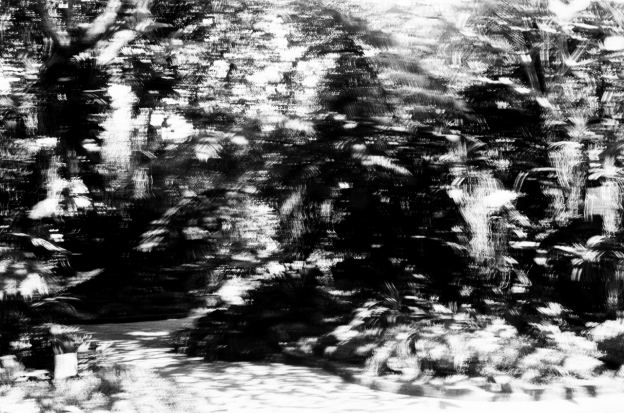
This approach also changes how she treats material. Sculptors and installation artists usually confront material through weight, structure, fabrication, and historical use. Concrete, metal, and plants may trigger recognizable associations, but materials do not carry a fixed symbolic dictionary. Tim Ingold reminds us that meaning emerges through material properties, environments, and ongoing change, rather than through an abstract idea imposed unilaterally on passive matter.[6] Vivienne’s distinctive move is to interrupt these relations through photography. Weight, temperature, use, and location fall away, and the material is compressed into a surface that can be seen and edited. She is not working directly with the stone, but with the question of how stone becomes image.
These textures do not enter a contextless state of purity. Once the architectural, natural, or everyday setting is removed, another context takes its place: whether names can be trusted, whether a fragment can stand for a whole, how memory completes missing information, and whether the world has a complete form independent of any individual viewpoint. Vivienne does not strip material of meaning so much as temporarily strip it of its original noun. She has also imagined printing the abstract images on translucent tracing paper and the figurative images on opaque paper, then layering them to create new spatial relations. Material becomes photographic image and later acquires another physical body through print. The cycle turns photography from a study of surfaces into a process through which material repeatedly changes identity.
I once understood photography in Vivienne’s practice as both a way of knowing the world and a means of healing. I would now put it more cautiously: it is first a return to the self. Design requires her to answer projects, brands, teams, and technical systems. Photography allows her to notice again what is drawing her attention. She looks at stone, water, cloud, and reflection while also observing how her own perception responds to them. Photography may not repair a wound that can be clearly named, but it does let her step away from the professional position of constant problem-solving and become, again, someone capable of being moved by the world.
Why Photography Resembles an Essay
During the audience discussion, someone asked Vivienne where she located the boundaries among photography, writing, and painting. She did not attempt a theory broad enough to encompass all three. Instead, she answered from experience. Photography and writing, she said, share certain qualities. Some photography resembles a novel, building a narrative through people, events, and continuity; her own photographs are closer to an essay or an imagist poem, moving through moments, leaps, pauses, and loose associations among images. As for painting, she answered candidly that although she looks at a great deal of it, she had not seriously considered its relationship to her photography. The hesitation felt honest. She did not invent a polished theory simply to complete the answer.
To say that photography resembles an essay is not merely to call it poetic. It describes how images think. A single photograph rarely offers a complete answer. Like a sentence in an essay, it gathers rhythm and direction only beside other images, words, and spaces. In “Rhetoric of the Image,” Roland Barthes distinguishes between “anchorage” and “relay.” Anchorage uses language to limit an image’s plurality of meanings, while relay allows text and image to contribute different information, with meaning developing between them.[7] Vivienne’s writing is closer to relay. “Tomorrow, stone may become nostalgia” does not explain the object in the photograph; it unsettles the stability of the name “stone.” Language does not secure the image to a correct interpretation. It opens another route through it.
Her use of Indexing and Atlas-like also clarifies why sequence matters. Aby Warburg’s Bilderatlas Mnemosyne did not rely on a single, linear written argument. It placed images from different periods and sources across panels so that meaning could emerge through resemblance, repetition, distance, and conflict.[8] Vivienne’s work is not a Warburgian study of cultural history, but it shares an awareness that an image can function as a node rather than a conclusion. Shimmering is therefore more than a collection of attractive textures. It is a private atlas through which she edits her own process of knowing by sampling, classifying, sequencing, and writing.
Another Q&A question returned to a line on her website: “Is beauty a decision?” Vivienne had struck the sentence through. She explained that the gesture carried a trace of rebellion. Whether the question can be conclusively answered matters less than the act of asking it, which compels the viewer to think. Yet she also stated clearly that beauty remains essential to her practice. However conceptually or philosophically dense a work may be, its form must still hold. She wants to “make invisible beauty visible” and to reach through tangible bodies toward the aura of the world.
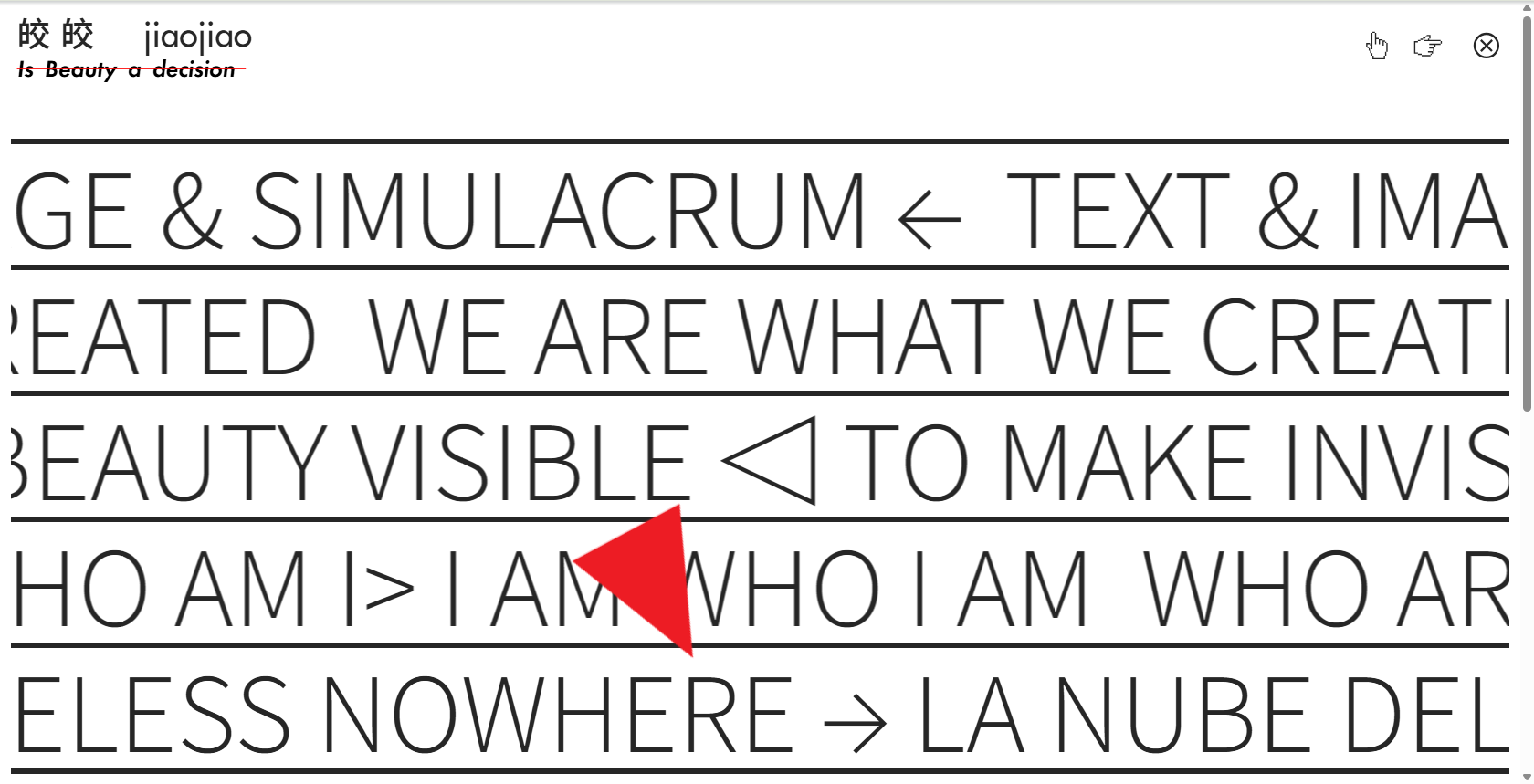
This produces one of the most generative tensions in her practice. Vivienne refuses to define beauty once and for all, yet insists that every work pass through aesthetic judgment. Meaning can remain open; form cannot be arbitrary. This returns us to the movement from impulse to discipline. Impulse allows the world to affect her, and discipline asks her to find an exact form for that encounter. Once the form exists, however, she resists sealing it with a final answer.
What makes Vivienne Yu Zhang’s work recognizable is not only a recurring composition, palette, or visual signature. More consistent is a cognitive route: an object first arrests her attention; its name and use are briefly suspended; perception is reorganized through lens, language, and sequence; and the object returns to the world in another relation. She hunts architecture from its periphery and approaches images from the outside of material. A literary image can become space, an architectural material map can become photography, and a photographic texture can become material again through paper and installation.
This is what Rexhibit’s first Artist Talk left me with most strongly. A portfolio shows what an artist has completed. Conversation brings the hesitation, contradiction, and working habits behind those results into public view. Vivienne noted that she had not fully recognized some of her own methods until another person named them, prompting her to look back at her practice. This may be the particular value of an Artist Talk: it does not simply ask an artist to explain finished work. It lets the maker encounter her own practice again through another person’s attention.Vivienne’s work begins in impulse but does not end there. Discipline gives feeling a form, while the finished form remains open to further imagination. Across rational design and sensory art, she does not choose one side over the other. She assigns them different responsibilities: reason allows feeling to endure, and feeling keeps existence available to be imagined again.
[1] John Dewey, Art as Experience, 1934.
[2] Donald A. Schön, “Designing as Reflective Conversation with the Materials of a Design Situation,” 1992.
[3] Viktor Shklovsky, “Art as Technique,” 1917.
[4] Edmund Husserl, Ideas Pertaining to a Pure Phenomenology and to a Phenomenological Philosophy, 1913.
[5] Gaston Bachelard, Water and Dreams: An Essay on the Imagination of Matter, 1942.
[6] Tim Ingold, “Materials against Materiality,” 2007.
[7] Roland Barthes, “Rhetoric of the Image,” 1964.
[8] Aby Warburg, Bilderatlas Mnemosyne, 1920s.
Primary artist materials: transcript of the Rexhibit Artist Talk, July 25, 2026; Vivienne Yu Zhang, jiaoZINE, March 2026; and Shimmering.