
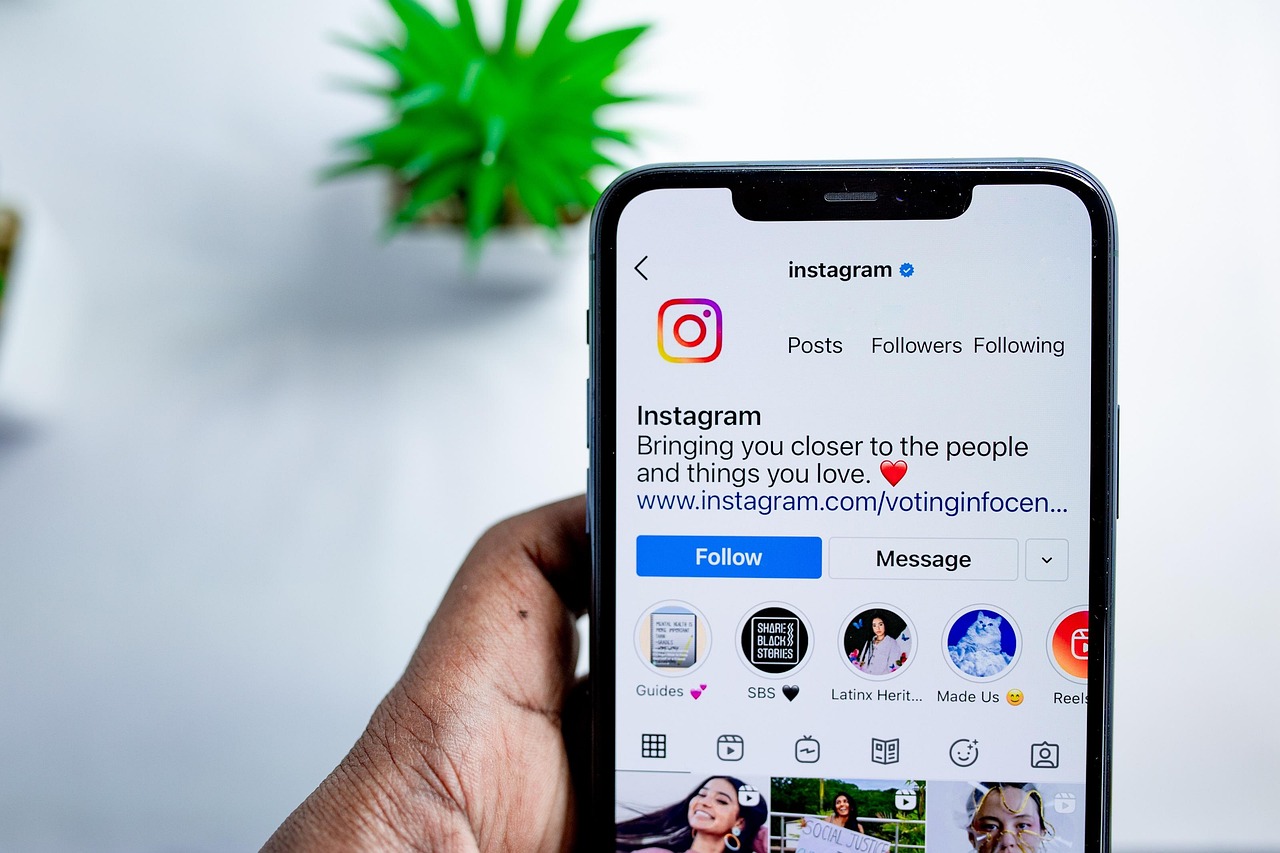
Social media is now part of everyday life in contemporary art, whether artists, art workers, and audiences welcome it or resist it. When Instagram launched in 2010, its chronological feed largely extended users’ existing social networks. Today, Feed, Stories, Explore, and Reels use different ranking systems, drawing on relationships, interactions, viewing time, and sharing[1]. These systems shape how work reaches an audience and what artists must do to remain visible.
What has this changed about the relationship between artists and galleries? Does wider access to an audience mean wider access to recognition? Or do galleries and other art institutions still decide whose work acquires lasting standing?
I. he Performance Era: Painting Shaped by the Algorithm
In April 2026, Artnet News senior editor Kate Brown published “Painting Has Entered Its Performance Era.” She described creators using transformation and suspense to compress hours of work into a brief reveal: an artist turns a finished canvas toward the camera, or a painting takes shape at speed to a dramatic soundtrack[2].
Making the act of creation public is hardly new. Hans Namuth’s photographs and films of Jackson Pollock helped establish an image of the painter as a performer. Yves Klein’s Anthropometries brought the body directly into the production of painting, while Marina Abramović made the encounter between artist and audience part of the work itself[3]. These practices differ substantially from the short-form art reveal, but they show that the conditions under which audiences watch art being made have a history of their own.
Brown’s examples span creators working outside established art institutions and artists already represented by major galleries. Faye Greenman, Kristen Rose, and Vanessa Horabuena, known for her rapid painting and religious subjects, use performance to attract attention and sales. Sophie von Hellermann painted visitors’ dreams at Pilar Corrias’s booth at Art Basel Paris in 2024. At the time Brown was writing, Norbert Bisky was preparing a painting event with the Berlin Philharmonic’s Karajan Academy[2].
Merike Estna’s project for the Estonian Pavilion at the 2026 Venice Biennale turns the exhibition space into an open studio, where she continues to paint before visitors[4]. Brown places this work in the context of feminist art history and institutional critique. In her account, the distinction between these uses of public painting depends on how the work addresses its artistic and institutional context. Technical skill alone does not explain why audiences receive one as contemporary art and another as social media content[2].
Instagram has no single algorithm governing every post. Viewing time, likes, comments, saves, and shares contribute differently to ranking across its various interfaces[1]. Nor does every artist make performative content. Many use the platform as a portfolio, maintain relationships with peers, or share exhibition news. This raises a distinction between being discovered and being recognized. Platform rankings influence who attracts attention; galleries, museums, and critical networks help determine whose work gains standing within the art establishment. Artists who decline the short-video reveal may lose opportunities for exposure. Whether that also limits their institutional recognition is a separate question.
II. Galleries Move In: Co-opting the Algorithm and Being Co-opted in Turn
Over the past decade, galleries’ use of social media has grown beyond exhibition announcements. Platforms now support the search for artists, the cultivation of collectors, and the promotion of work. Galleries retain a role in selecting artists and establishing market confidence, but using these tools also changes how they operate.
The late artist and commentator Hilde Lynn Helphenstein founded the satirical Instagram account Jerry Gogosian in 2018. Her commentary on the art world attracted collectors and industry insiders. In 2022, she curated the Sotheby’s selling exhibition “Suggested Followers: How the Algorithm Is Always Right,” choosing work by artists she had encountered through Instagram’s Explore recommendations. The platform supplied part of the pool from which she selected; it did not make the final curatorial decisions. A recommendation system had become part of a formal sales exhibition, mediated by someone whose reputation had itself developed on social media[5].
The Art Basel and UBS Survey of Global Collecting 2025 provides a broader market context. Among respondents who had bought through galleries or dealers in 2024–2025, 51 percent reported at least one purchase through Instagram without first seeing the work in person. The report gives a figure of 41 percent for 2023[6].
These collectors were willing to buy without an in-person viewing, but the purchases still passed through galleries or dealers. The figure describes a change in how buyers encounter and purchase work; it does not, by itself, show that the intermediary has disappeared. Other findings point to a wider choice of channels: 63 percent of respondents had bought directly from an artist at least once in 2024–2025, compared with 27 percent in 2023[6]. Galleries remain important intermediaries, but collectors also buy elsewhere.
Major galleries have created dedicated roles to support this work. David Zwirner’s listing for a “Social Media Manager & Content Creator” includes planning and publishing content, producing short videos, tracking performance, and supporting paid campaigns[7]. Sotheby’s and Christie’s also maintain accounts on Instagram, TikTok, and YouTube.
Maintaining this presence has costs. In figures published in 2025, Xanadu Gallery founder Jason Horejs reported that advertising accounted for 19.4 percent of the gallery’s expenditure, second to wages and compensation at 41.2 percent. He attributed the increased advertising share to investment in social media marketing over the previous eighteen months[8]. A regional gallery in Scottsdale cannot stand for the whole industry, but the example shows how substantial that commitment can become. As galleries adopt platforms to reach buyers, they also commit staff time and money to meeting the platforms’ demands.
III. Consecration and Reproduction: Can Algorithms Confer Recognition?
For Pierre Bourdieu, artistic value is produced through the relationships and judgments that constitute an artistic field. Critics, dealers, fellow artists, publishers, and academic institutions confer legitimacy through exhibitions, criticism, awards, collecting, and education. Bourdieu calls this process consecration. The prestige it establishes can function as symbolic capital[9]. Isabelle Graw’s and Olav Velthuis’s studies of art markets and prices extend this discussion: galleries, auction houses, art fairs, and pricing practices participate in producing value[10][11].
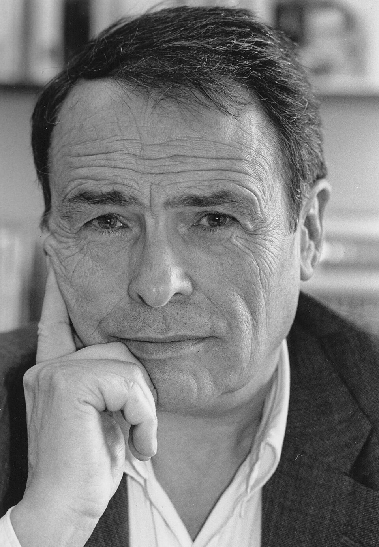
Walter Benjamin’s account of mechanical reproduction raises a related question. As images circulate more widely, what happens to the authority of the original? Benjamin describes the erosion of its aura: its unique presence in a particular time, place, and tradition[12]. Yet the ability to reproduce an image does not necessarily weaken the market’s reliance on authentication.
Joe Simon-Whelan’s dispute over a Warhol silkscreen self-portrait illustrates this distinction. He bought the work in 1989. According to his later legal complaint, it had previously been accepted by people connected with Warhol’s estate and by dealers. The Andy Warhol Art Authentication Board nevertheless rejected it in 2001 and again in 2003, stamping “DENIED” on its reverse. Simon-Whelan alleged that these decisions seriously damaged its value and marketability. A court allowed some of his antitrust and fraud claims to proceed; that procedural decision did not establish either the work’s authenticity or the board’s liability[13].
Authentication and institutional recognition are different judgments: one concerns a work’s attribution, while the other concerns its standing. The Warhol dispute primarily shows why wider circulation cannot settle a work’s attribution. Images can be reproduced and shared, while provenance, editions, signatures, archives, and expert judgments continue to matter to the status of the object being sold.
Online attention can bring an artist to the notice of galleries, curators, and collectors, but exhibition and representation decisions still require their judgment. An endorsement from an established gallery, prize, or biennial can, in turn, attract more online attention. The relationship is unequal: institutional recognition can help generate exposure, while exposure offers no assurance of institutional recognition.
Those judgments are themselves subject to platform pressures. Galleries may treat engagement figures as evidence of commercial potential; curators may consider how an exhibition will photograph; museums may design spaces that encourage visitors to share images. Artists may likewise adjust their work to a thumbnail, a vertical frame, or a short video. Institutional authority persists, but platform priorities increasingly enter the decisions through which it is exercised.
IV. Discovery Does Not Equal Recognition: Three Careers
Anna Weyant, Devon Rodriguez, and Ai Weiwei show how differently online attention can enter an artist’s career. Weyant’s visibility developed alongside gallery support and critical endorsement. Rodriguez built a career centered on a large public audience and a different kind of representation. Ai brought an established institutional reputation to his use of social media.
Weyant posted her paintings on Instagram, where critic Jerry Saltz shared her work. Retold through her later auction prices, this can sound like a shortcut to the top of the market. Her career developed through several institutions, however. In 2019, 56 Henry presented her first New York solo exhibition, “Welcome to the Dollhouse.” She subsequently worked with Blum & Poe and joined Gagosian in 2022[14]. That year, her 2020 painting Falling Woman sold at Sotheby’s for approximately $1.62 million, more than ten times its $150,000 low estimate and about eight times its $200,000 high estimate—a personal auction record at the time[15].
The sale followed critical attention, exhibitions, gallery relationships, and activity in the secondary market. Saltz’s post mattered because it carried his reputation as a critic. A large number of likes can draw attention to a painting, but it does not provide the same kind of endorsement.
Rodriguez’s subway portrait videos build toward a different encounter: he conceals the drawing, reveals it to his subject, and captures a surprised or emotional response. By 2025, published accounts placed his TikTok following at around 34 million; Forbes’s 2025 “Top Creators” list put his combined following across platforms at approximately 64.6 million[16][17]. In 2021, Girl on Subway sold at Phillips for $22,680, more than three times the upper end of its $5,000–$7,000 estimate[18]. This was a substantial secondary-market debut for a creator in his twenties who did not then have traditional gallery representation.
His subsequent career also involved institutions, though not primarily the conventional commercial gallery system. He signed with talent agency UTA in 2021. UTA Artist Space presented his first New York solo exhibition, “Underground,” as a Chelsea pop-up in 2023[19]. Forbes included him in its 2022 “30 Under 30” social media category[17]. He told The Art Newspaper that he had turned away from pursuing gallery representation and toward social media, studying how content circulates on the platforms[16].
Describing this as a failure to achieve recognition would overlook both his audience and his connections to the art world. He was a finalist in the Smithsonian National Portrait Gallery’s Outwin Boochever Portrait Competition, and UTA Artist Space operates across the entertainment and visual arts industries[16][19]. Public support, brand partnerships, and direct sales can sustain a successful career, even when they do not confer the same standing as major gallery representation or museum exhibitions.
Ai Weiwei has also used social media and networked technologies extensively. In 2012, his “WeiweiCam” project streamed footage from four cameras in his home and workspace around the clock. Chinese authorities ordered it shut down after roughly 46 hours and more than five million visits[20]. In 2017, Hansel & Gretel, his collaboration with Jacques Herzog and Pierre de Meuron, used drones, infrared cameras, and facial recognition to track visitors, making surveillance something they could experience within an installation[21].
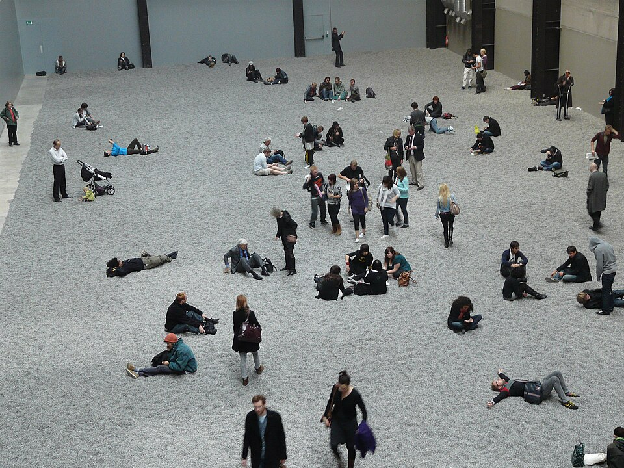
Ai’s institutional standing was already well established before his intensive use of Instagram. It included Fairytale and Template at documenta 12 in 2007, Sunflower Seeds in Tate Modern’s Turbine Hall in 2010, and representation by Lisson Gallery from that year[22][23][24]. His 81-day detention in 2011 also intensified international attention to his political activities. Social media gave an artist with an established institutional reputation additional ways to express his views, intervene in public debate, and reach audiences.
For Rodriguez, platforms were central to building a public following and a career less dependent on traditional galleries. For Ai, they became part of an already established artistic and public practice. A following alone tells us little about how an artist acquired institutional standing or what role social media plays in sustaining a career.
Conclusion: Define Success Before Judging a Career
The distinction between attention and recognition matters because artists pursue different goals. A reliable income, public support, gallery representation, museum acquisitions, and a place in art history may reinforce one another, but none guarantees the others. Treating them as a single measure of success obscures the choices involved in building a career.
Co-optation works in both directions. Galleries and other institutions incorporate online attention into their selection and valuation of artists. Platforms, meanwhile, change their working practices through the promise of exposure and the labor and expense required to pursue it. Established institutions retain considerable authority, even as the conditions under which they exercise it change.
Declining to make short-form performance content may mean giving up some exposure; participating does not guarantee lasting recognition. The question for an artist is what kind of working life they want, and what the pursuit of platform visibility asks them to change. Artists can still choose to avoid, embrace, or resist social media. Those choices require an understanding of how visibility is distributed, who grants recognition, and what pursuing these opportunities demands of them. Algorithms have changed the routes into the art world; the authority to judge artistic value continues to be negotiated as part of that change.
[1] Instagram, "Shedding More Light on How Instagram Works," June 8, 2021; "Instagram Ranking Explained," May 31, 2023.
[2] Kate Brown, "Painting Has Entered Its Performance Era," Artnet News, April 15, 2026.
[3] The Museum of Modern Art, "Jackson Pollock: Namuth Photos & Film"; Yves Klein, Anthropometry: Princess Helena, 1960.
[4] La Biennale di Venezia, "Estonia: The House of Leaking Sky," 2026.
[5] Sotheby's, "Jerry Gogosian's Suggested Followers: How the Algorithm Is Always Right," September 2022.
[6] Art Basel & UBS, The Art Basel and UBS Survey of Global Collecting 2025, by Clare McAndrew / Arts Economics.
[7] David Zwirner Gallery, "Social Media Manager & Content Creator," job listing, accessed September 2026.
[8] Jason Horejs, "Inside the Numbers: The Costs of Operating an Art Gallery," RedDotBlog, April 15, 2025.
[9] Pierre Bourdieu, The Rules of Art: Genesis and Structure of the Literary Field (1992; English trans. 1996).
[10] Isabelle Graw, High Price: Art Between the Market and Celebrity Culture (2009; English trans. 2010).
[11] Olav Velthuis, Talking Prices: Symbolic Meanings of Prices on the Market for Contemporary Art (2005).
[12] Walter Benjamin, "The Work of Art in the Age of Mechanical Reproduction" (first version 1935; revised 1936).
[13] U.S. District Court, S.D.N.Y., Simon-Whelan v. The Andy Warhol Foundation for the Visual Arts, Inc., No. 07 Civ. 6423, decision dated May 26, 2009.
[14] Gagosian, Anna Weyant biography.
[15] Sotheby's, Anna Weyant, Falling Woman, The Now Evening Auction, May 19, 2022.
[16] Carlie Porterfield, "TikTok art star's cross-over moment," The Art Newspaper, September 6, 2023.
[17] Forbes, "Top Creators 2025" and "30 Under 30 2022: Social Media."
[18] Phillips, Devon Rodriguez, Girl on Subway, June 24, 2021.
[19] High Line Nine / UTA Artist Space, "Underground: Devon Rodriguez," September 6–30, 2023.
[20] China Digital Times, "Ai's WeiweiCam Forced Offline After 46 Hours," April 4, 2012.
[21] Park Avenue Armory, "Hansel & Gretel," 2017; Herzog & de Meuron, project record.
[22] documenta, "documenta 12" retrospective.
[23] Tate, "The Unilever Series: Ai Weiwei: Sunflower Seeds," 2010–2011.
[24] Lisson Gallery, "Ai Weiwei: Disposition," May 29, 2013.