For the best experience, please rotate your phone or switch to a larger screen.

Horizontal viewing is recommended for full access to this section.

Ziyi Yan
Interview
< Back
Bio   +
Contact   +
01 Was there a defining moment or specific event that made you seriously think about the meaning of making art?
03When you encounter material limitations or technical challenges, how do you usually respond or adapt?
05For those who have never experienced your work before, what do you most hope they see or feel? and why?
07If you had unlimited time and resources, what project would you most want to realize?What would it mean to you?
09Across your paintings, textiles, and installations, many of the organic forms can evoke growths, glands, sacs, tissues, or other unfamiliar biological structures. Yet they often appear through a soft, muted palette of pinks, blues, purples, and creamy tones, giving the work an almost dreamlike or tender quality.

How do you think about this contrast between forms that can feel bodily or even unsettling and colours that are gentle and seductive? Is this palette primarily intuitive and personal, or does it play a conceptual role in how you want the body to be perceived? 
02 How do you balance rational thinking and intuitive expression in your creative process?
04Do you mind if viewers interpret your work differently from your original intention? In your opinion, does the artwork belong to the audience once it is completed?
06 Have your personal life experiences, such as geography, culture, family, or education, influenced your practice? Could you share an example?
08Your earlier work often approached intimacy and belonging through observations of people and everyday relationships. In your recent work, the recognizable figure has gradually disappeared, replaced by membranes, tissues, organs, wounds, and imagined organisms. What prompted this shift from depicting bodies that already exist to constructing bodies that do not? Has your understanding of what a “body” can be changed along the way? 
10Your work often keeps traces of change visible. Scars, stitches, growths, and irregular forms remain rather than disappearing through repair. At the same time, many of these forms are difficult to clearly identify.

What interests you about keeping this sense of uncertainty in the work? Do you think ambiguity can express bodily experiences or feelings that a clear image cannot? 
< Back
01
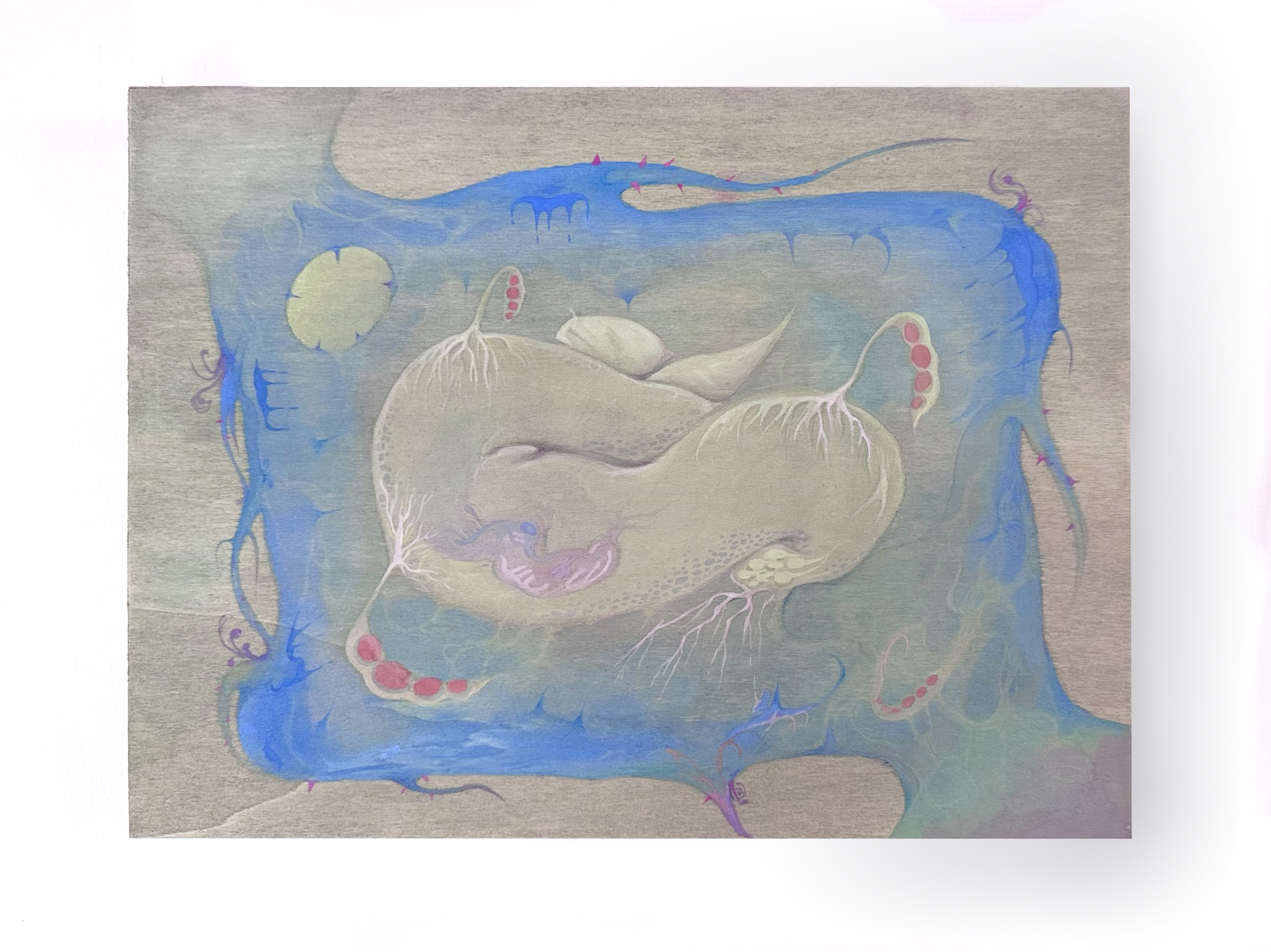
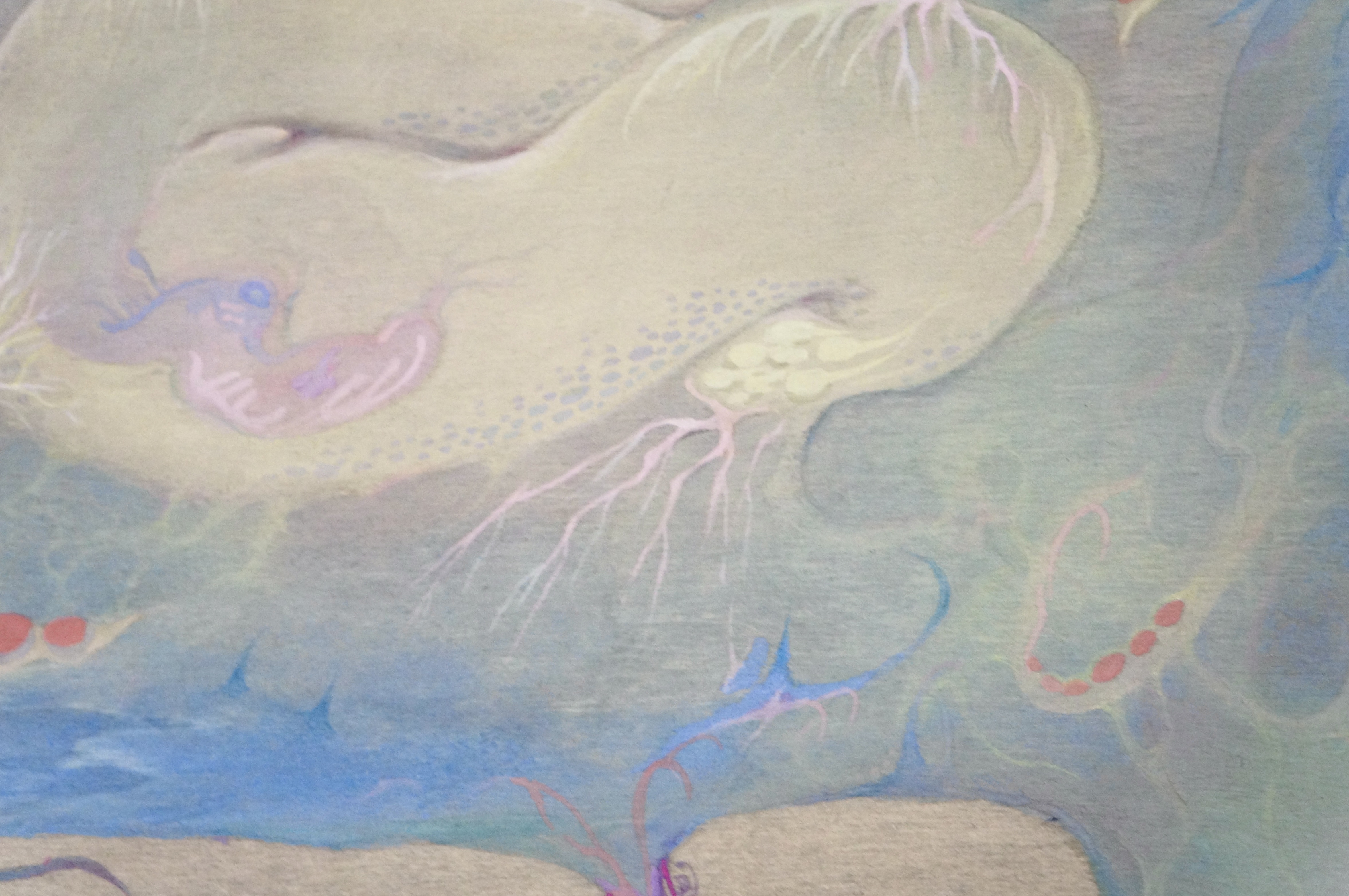
In Slow Currents
2026
gouache, colored pencil, pastel on wood panel
30.5 x 40.6 cm
Was there a defining moment or specific event that made you seriously think about the meaning of making art?
It's difficult to point to one specific moment because I think there were many small experiences that gradually came together into one feeling. I've never been someone who's particularly good at expressing myself through words. Instead, I find it much easier to "speak" through drawing and making things with my hands.

I'm naturally quite introverted, and art has always felt like a gentle and personal way for me to express myself. It gave me a space where I could say things that I couldn't easily put into words. I think that's when I first realised how much I wanted to communicate through art. Since then, creating has gradually become a natural part of my everyday life.
< Back
02
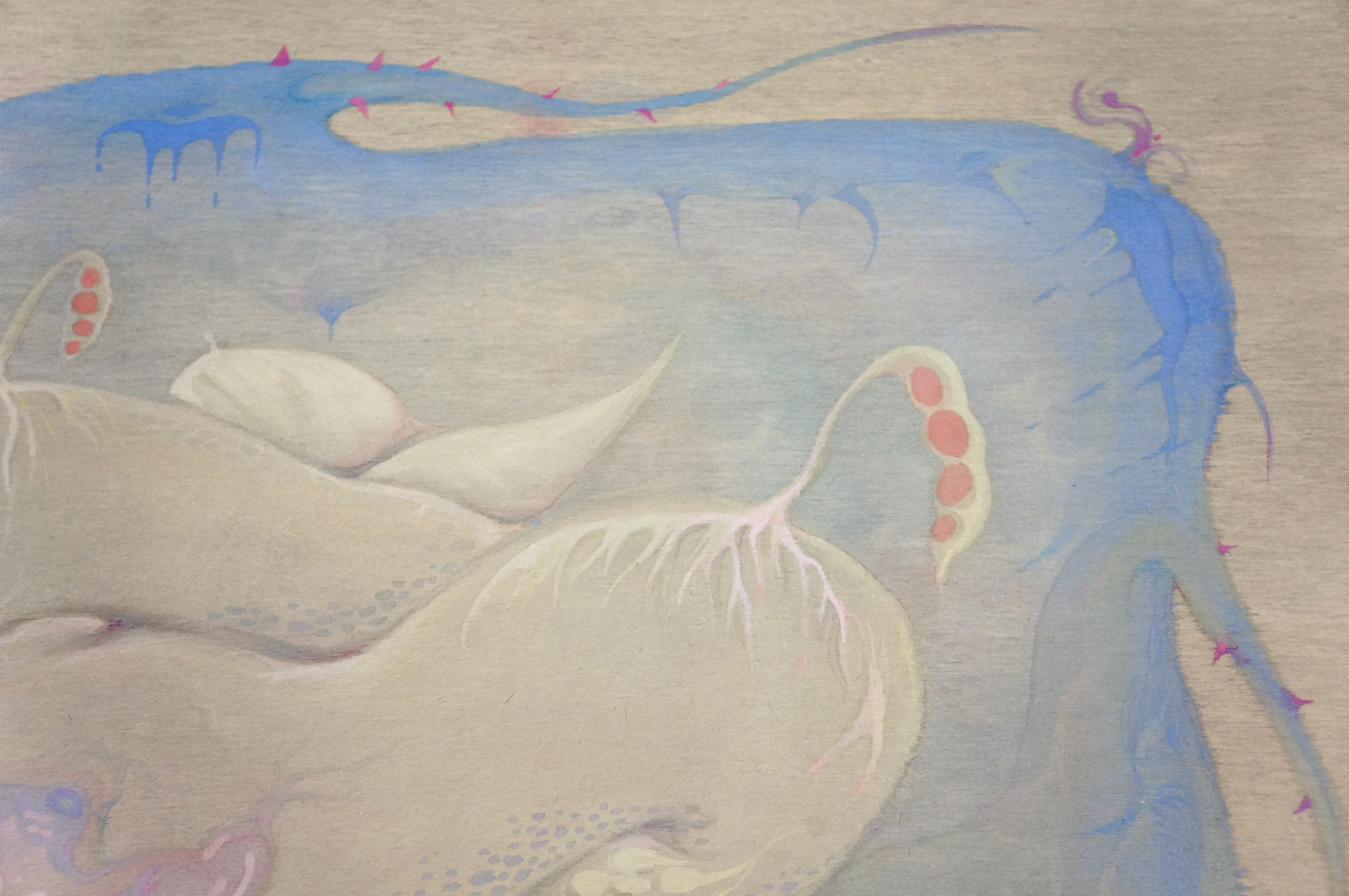
In Sow Currents, Detail Shot
How do you balance rational thinking and intuitive expression in your creative process?
To be honest, I still find it difficult to balance the two. I'm a very intuitive person, so I usually paint by instinct and take things one step at a time rather than following a fixed plan.

Sometimes that intuition takes me so far that I lose sight of what I wanted to express. When that happens, I pause, go back to my original idea, revisit my research, and organise my thoughts before continuing. My process is really about moving back and forth between intuition and reflection.
< Back
03
The Bloom of Boundaries I, Detail Shot
When you encounter material limitations or technical challenges, how do you usually respond or adapt?
I usually deal with technical challenges by gathering lots of references and experimenting. I like to try different approaches until something clicks. The solution isn't always what I expected at first. In fact, some of my favourite outcomes have come from accidents or experiments that worked better than planned.
< Back
04
The Bloom of Boundaries I
2025
coffee grounds, acrylic, paste
40.6 x 50.8 cm
Do you mind if viewers interpret your work differently from your original intention? In your opinion, does the artwork belong to the audience once it is completed?
Not at all. I think once a work is finished, it can belong to both the artist and the audience. Art is meant to be experienced by people, so it's only natural that everyone will have their own understanding.

I actually enjoy hearing different perspectives. For me, making art is a way of expressing myself and giving my thoughts a voice. Once I choose to share my work with the public, I also accept that it will be viewed, interpreted, and discussed in different ways. Whether I agree with those interpretations or not is up to me, but I don't think there's only one "correct" way to understand a work.
< Back
05
The Bloom of Boundaries II
2026
coffee grounds, acrylic, paste, wool, thread, metal frame
49 x 59 cm
For those who have never experienced your work before, what do you most hope they see or feel? and why?
I think I'm quite particular about developing my own visual language. But honestly, I just hope people can feel a sense of softness, calmness, and maybe even a little healing when they look at my work. I guess that's quite similar to my personality. I'm pretty quiet and soft.
< Back
06
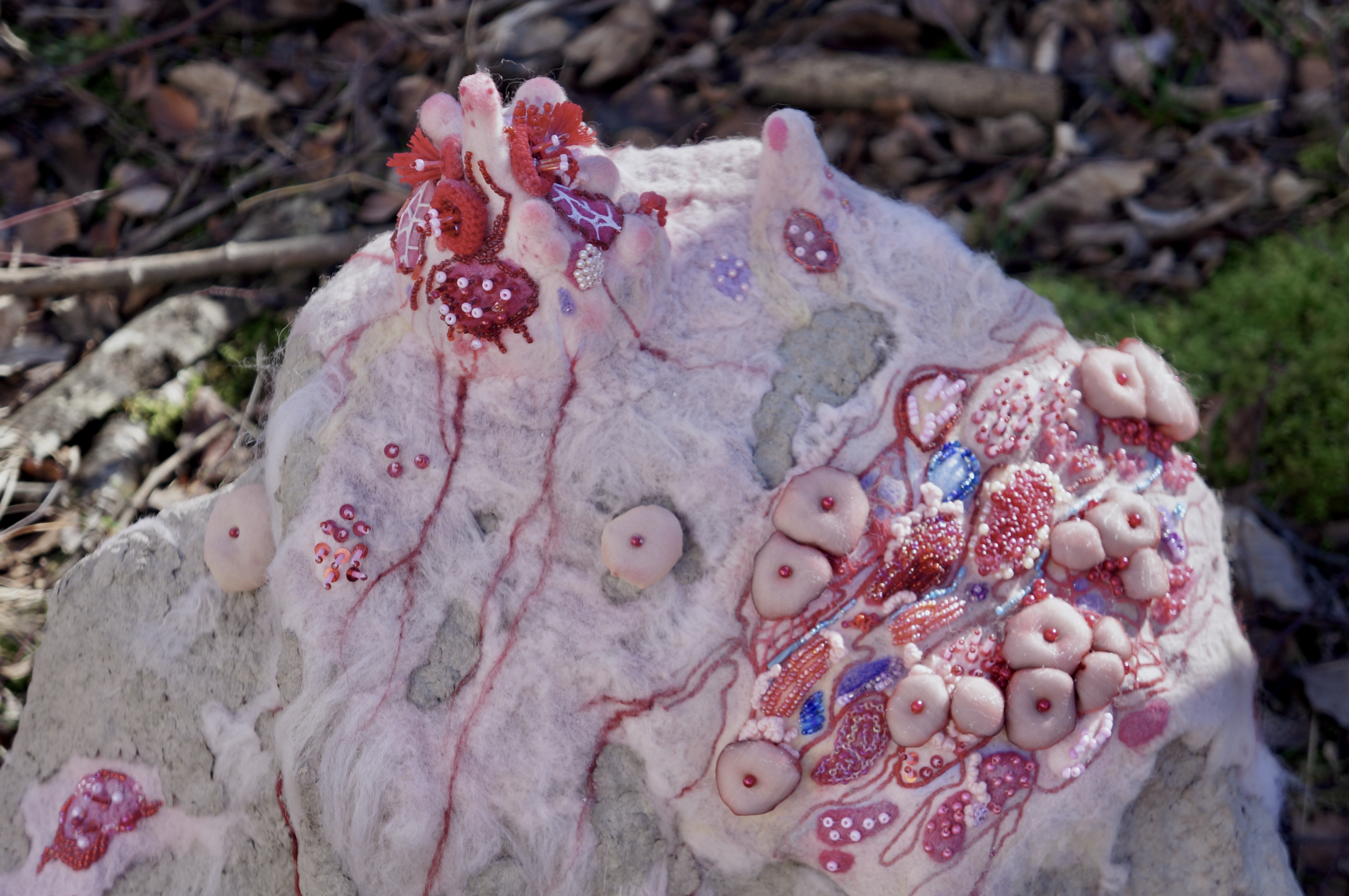
What the body records 2
2025
wool felt, beads, paper pulp, yarn, textile fabric cotton thread
68 x 40 x 53 cm
Have your personal life experiences, such as geography, culture, family, or education, influenced your practice? Could you share an example?
I think studying in the UK has had a big influence on my practice. Compared with my previous experience studying art in China, I found the environment here much more open and experimental. I was encouraged to explore ideas freely and wasn't too worried about whether something was "right" or "wrong".

That gave me the confidence to develop my own visual language. For example, my series The Bloom of Boundaries I and II marked an important stage when I started creating more abstract, organic, and imagined life forms. I think those works really represent the direction my practice has grown into.
< Back
07
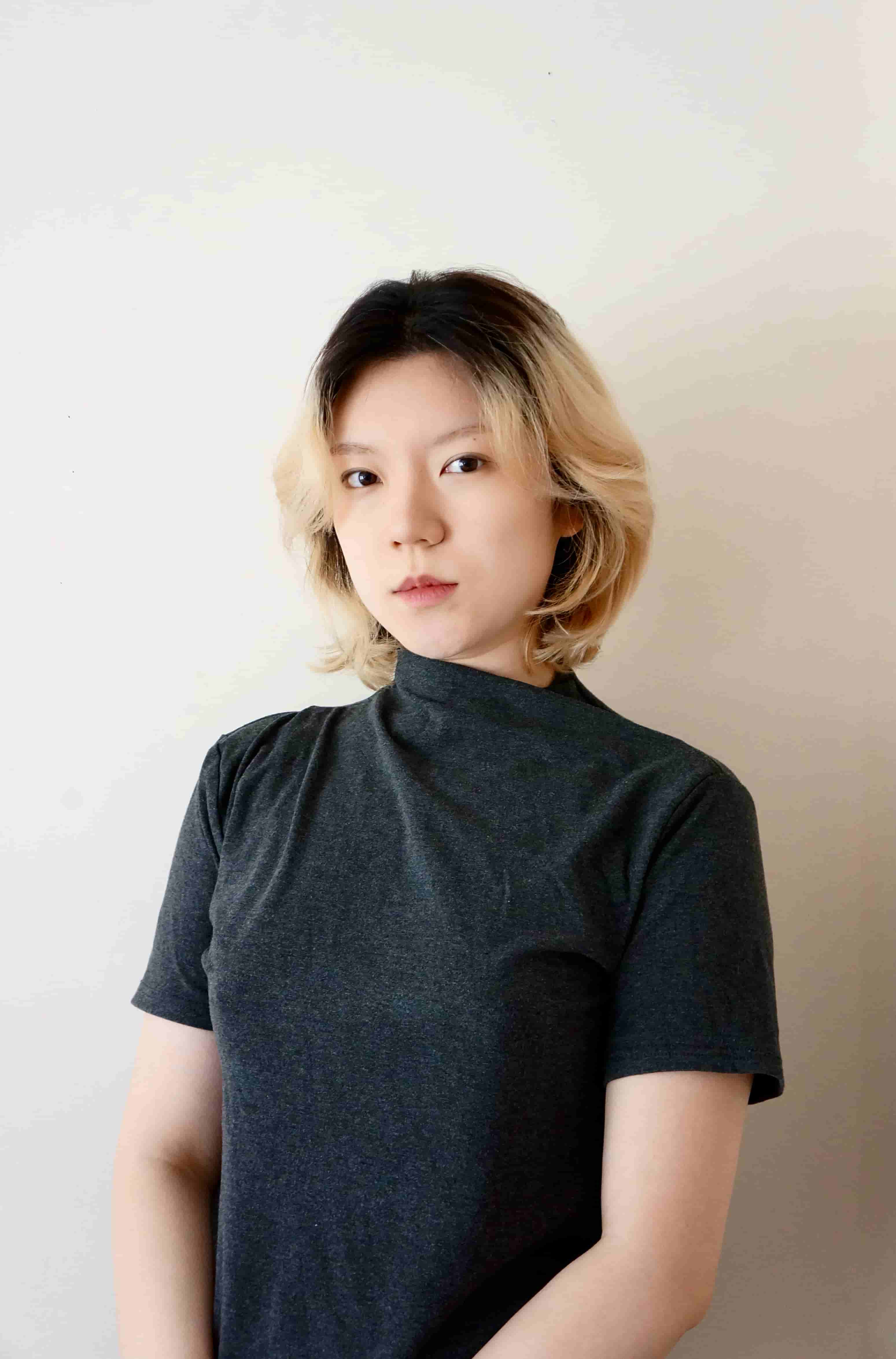
Artist Portrait
If you had unlimited time and resources, what project would you most want to realize? What would it mean to you?
Maybe I'd create a large immersive installation that people could walk into or feel surrounded by. I'd use soft materials and anything else that makes people feel comfortable and relaxed.

I feel like life is really stressful for a lot of people now. I'm quite a laid-back person myself, and sometimes I find it difficult to live in such a fast-paced environment. So, if I had the chance, I'd love to create a space where people could slow down for a while, relax, and maybe leave feeling just a little bit lighter than when they came in.
< Back
08
What the body records 1
2025
wool felt, beads, paper pulp, yarn, textile fabric, cotton thread,
68 x 40 x 53 cm
Your earlier work often approached intimacy and belonging through observations of people and everyday relationships. In your recent work, the recognizable figure has gradually disappeared, replaced by membranes, tissues, organs, wounds, and imagined organisms.

What prompted this shift from depicting bodies that already exist to constructing bodies that do not? Has your understanding of what a “body” can be changed along the way?
I've actually thought about this myself, and I think the answer is much simpler than people might expect. During art school, especially for projects like my GSA degree show, using recognisable figures or everyday subjects was simply a more direct way for me to respond to the briefs and questions set by the course.

But abstraction has always been part of my practice. Even before coming to the UK, most of the work I made in my own time was already quite abstract and intuitive. I guess I'm the kind of artist who adapts my work depending on the context. Now that I'm creating more independently again, it feels like I've simply returned to what comes most naturally to me.

As for the idea of the body, I don't think my understanding has changed that much. To me, a body has never had one fixed form. It's something tangible, soft, and organic. It is a presence that can hold emotions, memories, or meaning, regardless of whether it looks human or not.
< Back
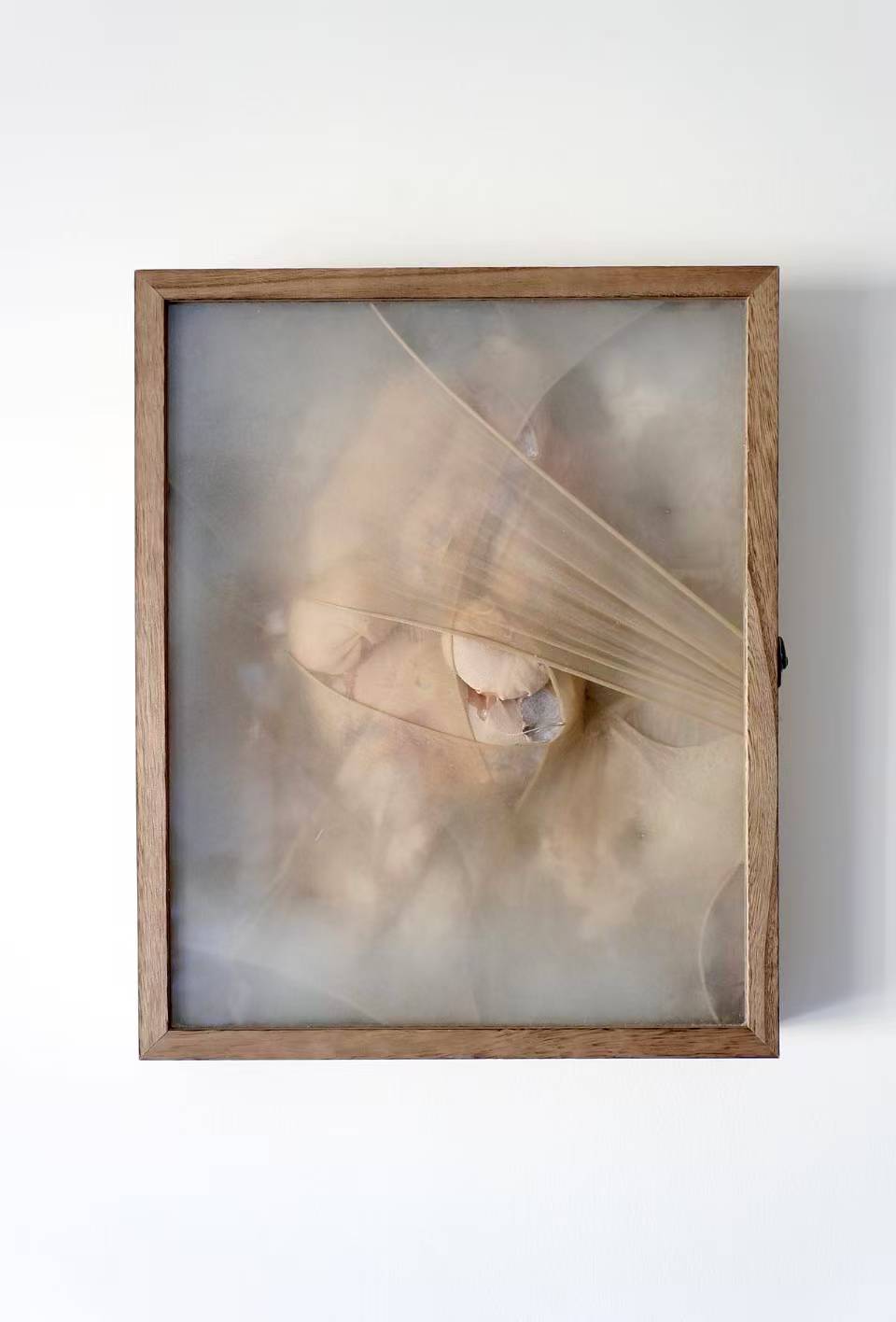
09
Enfolding
2026
Cotton, steel wire, nylon fabric, epoxy resin,
soft pastel, cardboard, hand stitching, solder and oak frame
33 × 40.6 cm
 Across your paintings, textiles, and installations, many of the organic forms can evoke growths, glands, sacs, tissues, or other unfamiliar biological structures. Yet they often appear through a soft, muted palette of pinks, blues, purples, and creamy tones, giving the work an almost dreamlike or tender quality.

How do you think about this contrast between forms that can feel bodily or even unsettling and colours that are gentle and seductive? Is this palette primarily intuitive and personal, or does it play a conceptual role in how you want the body to be perceived?
Even if I'm responding to something more critical or uncomfortable, I still want the work to feel approachable rather than difficult to engage with.

So I think the colours come from both intuition and intention. On one hand, these are simply the colours I'm naturally drawn to. But I also think that instinct exists for a reason. Maybe, subconsciously, I've always wanted colour to create a softer way into the work. I hope the colours encourage people to slow down, feel at ease, and spend time with these imagined bodies without feeling that they need to immediately understand or define them.
< Back
10
Yan, In Slow Currents
2026
gouache, colored pencil,pastel on wood panel
30.5 x 40.6 cm
Your work often keeps traces of change visible. Scars, stitches, growths, and irregular forms remain rather than disappearing through repair. At the same time, many of these forms
are difficult to clearly identify.

What interests you about keeping this sense of uncertainty in the work? Do you think ambiguity can express bodily experiences or feelings that a clear image cannot?
I think that sense of ambiguity comes largely from my personality. In general, I tend to have a very open attitude towards things. I rarely feel that there's only one right answer or one way of seeing something. I might have my own preferences, but I usually believe that different perspectives exist for a reason.

That naturally finds its way into my work. I like leaving space for people to think and make their own connections. I feel like I provide a starting point, and the rest is up to the viewer.

So for me, every trace has its own meaning. Whether it's a scar, a stitch, or an irregular form, I don't think those things need to be hidden or repaired. Keeping them visible, leaving room for different interpretations, feels just as important.
Brooklyn, NY
Menu
Contact us
Newsletter
Thank you! Your submission has been received!
Oops! Something went wrong while submitting the form.
© 2026 Rexhibit. All rights reserved.
Contact us
Newsletter
Thank you! Your submission has been received!
Oops! Something went wrong while submitting the form.
© 2026 Rexhibit. All rights reserved.