For the best experience, please rotate your phone or switch to a larger screen.

We're currently optimizing this section for mobile — improved viewing will be available in future updates.

Xinyu Liu
Interview
< Back
Bio   +
Contact   +
01 Was there a defining moment or specific event that made you seriously think about the meaning of making art?
02 How do you balance rational thinking and intuitive expression in your creative process?
07If you had unlimited time and resources, what project would you most want to realize?What would it mean to you?
09 In works such as Fool’s Hour and Waiting Is a Frenzy, your ideas often take on very clear and recognizable visual forms. How do you move from philosophical or research-based questions into these concrete images? Is this clarity something you intentionally maintain, and do you see your design background playing a role in that process?
03When you encounter material limitations or technical challenges, how do you usually respond or adapt?
04Do you mind if viewers interpret your work differently from your original intention? In your opinion, does the artwork belong to the audience once it is completed?
05For those who have never experienced your work before, what do you most hope they see or feel? and why?
06 Have your personal life experiences, such as geography, culture, family, or education, influenced your practice? Could you share an example?
08Your concept of art highlights the tension between cultural identity and legal status. What first led you to focus on this misalignment, and how has it shaped the way you think about transnational movement, belonging, and the instability of the self?
10Your work challenges linear ideas of time and instead approaches time as something cyclical, shared, and collectively experienced. How do you materialize that idea through video, sculpture, or installation? How do you decide what formal or spatial conditions can best hold that temporal complexity?
< Back
01
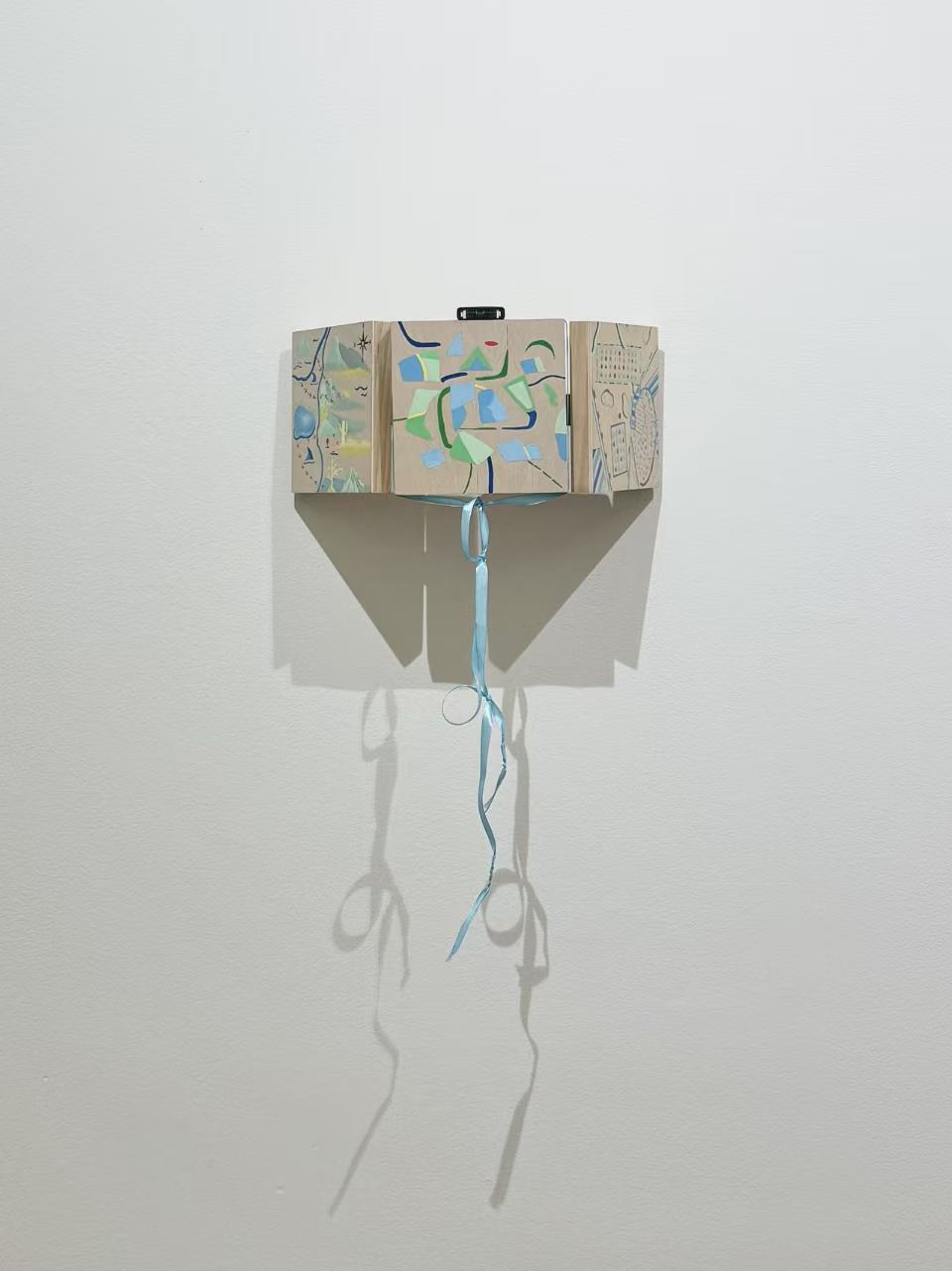
Always Right
Wood panel, level, ribbon
24'' x 24''
2025
Was there a defining moment or specific event that made you seriously think about the meaning of making art?
I try to understand things through making that I cannot fully articulate yet. For example, I am deeply interested in how time acts upon the body, the suspended feeling that comes with migration, and the state of being pulled between different cultures, systems, and emotions. To me, these are not abstract ideas, but very real sensations that exist in both the body and the mind.

It often feels like I can only begin to understand them by turning them into material, space, image, or some kind of concrete structure. Through that process, I gradually come to see why I am drawn to these questions and how they relate to my own experience. Many times, the work seems to know what I am thinking before I do, and I find myself slowly catching up with it.

I make art because I cannot pretend not to notice certain feelings. Rather than allowing them to remain vague and unsettled within me, art gives me a way to transform them into something that can truly exist in the world.
< Back
02
Lumibaatata's Park
Mixed media
6'' x 6''
2026
How do you balance rational thinking and intuitive expression in your creative process?
I think it really depends on my state of mind at the time. Sometimes I approach a work in a very rational and structured way, moving carefully from research to sketching to making. Other times, I begin much more intuitively, following a feeling before I fully understand it. For me, art is both an entrance and an exit. It is a way of entering into emotions and questions I have not yet figured out, and at the same time, a way of letting them out by giving them a concrete form.
< Back
03
Lumibaatata's Garden
Mixed media,
6'' x 6''
2025
When you encounter material limitations or technical challenges, how do you usually respond or adapt?
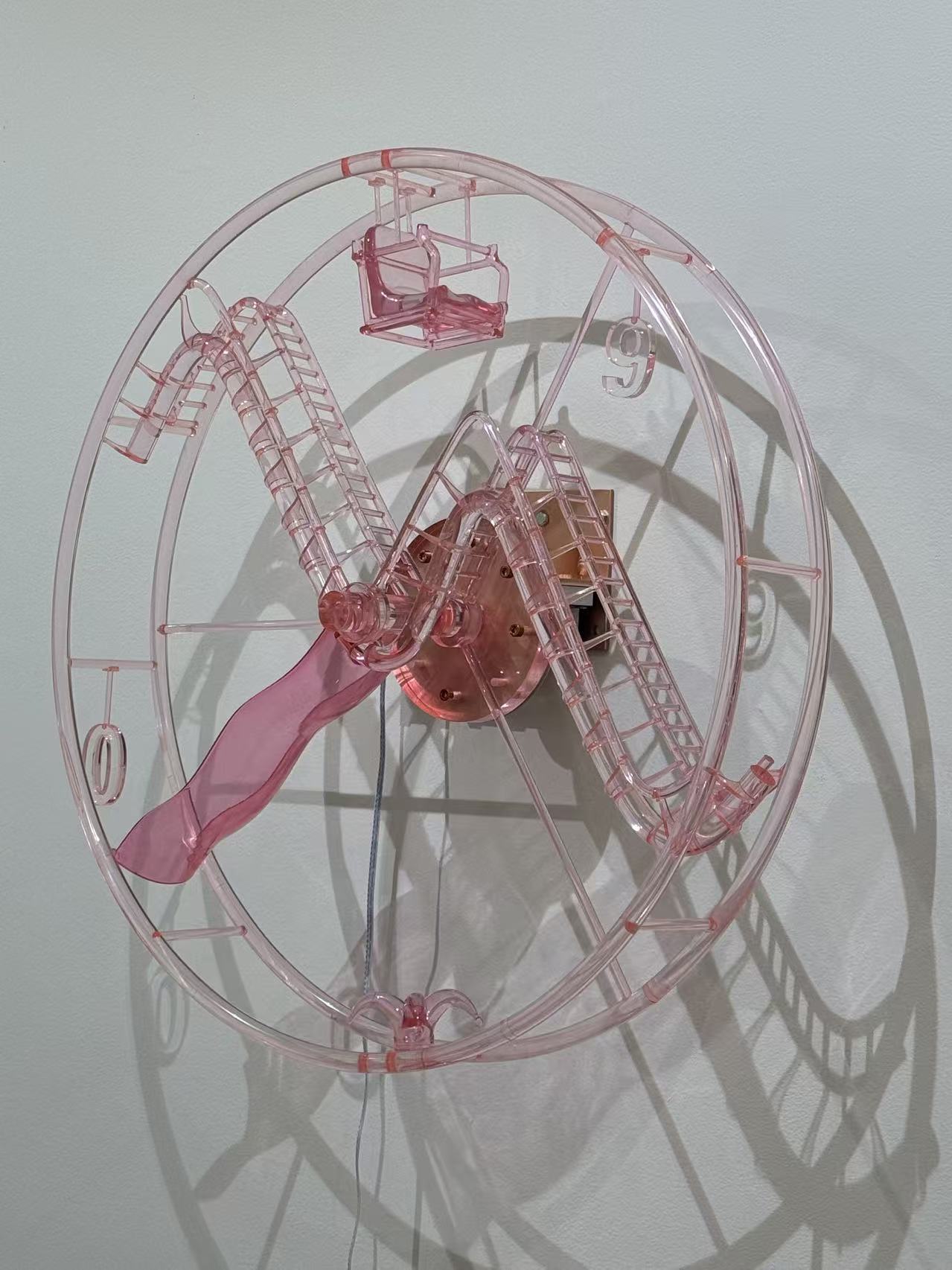
When I run into material or technical limitations, I usually step back and ask what the work really needs. In the case of Fool’s Hour, I originally wanted to make it through 3D printing, but I found that the size limitations of the process restricted the effect I was looking for. So I changed the material and used acrylic instead, which allowed the work to have a stronger visual presence. For me, this kind of adaptation is an important part of the process. I do not see it as compromising the work, but as finding the most suitable way to realize it.
< Back
04
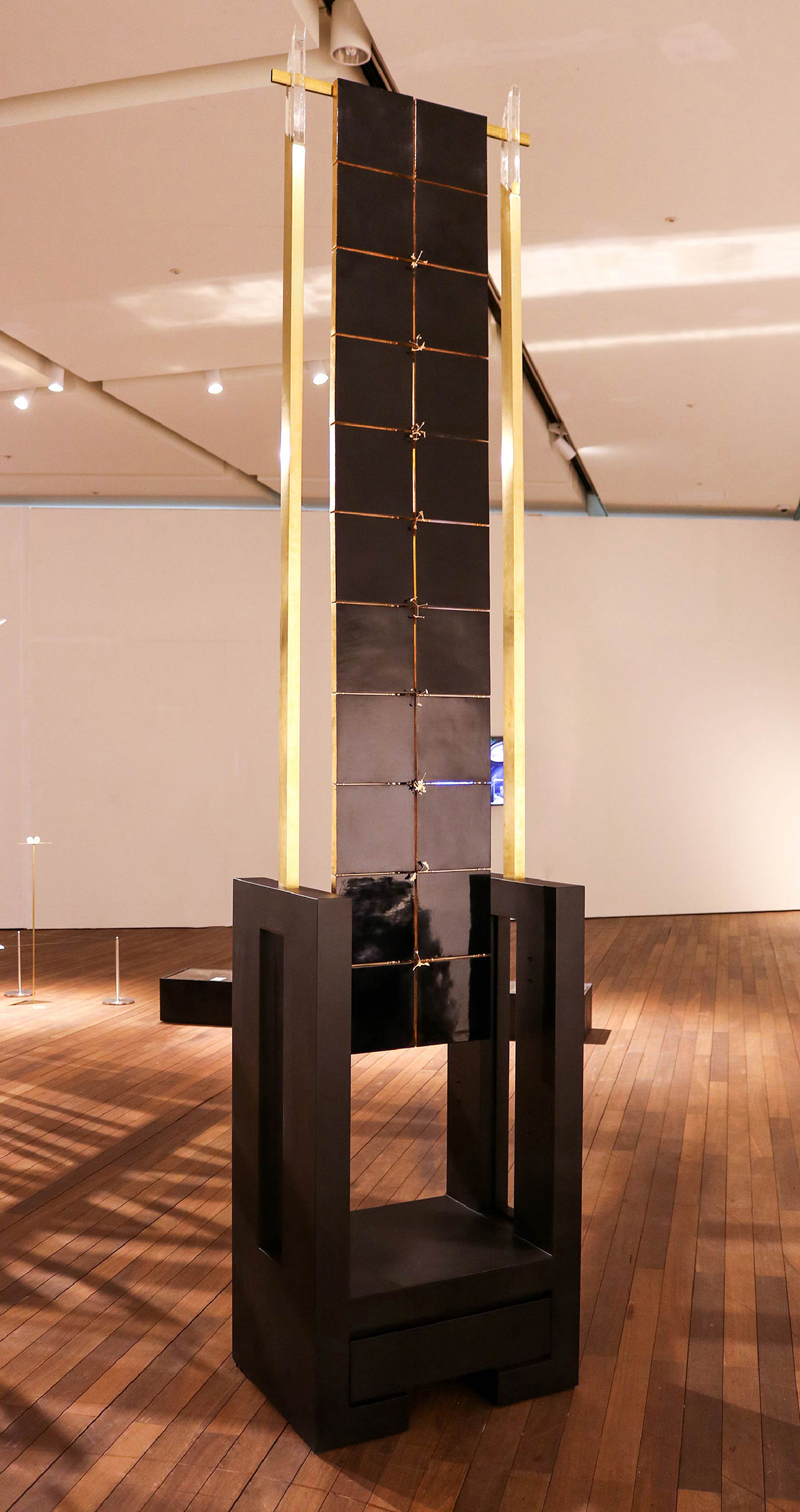
T-axis: the entrance/clock of the ghost’s room
Sap of the lacquer tree, fake glit, brass, MDF, OHP film, spray paint, clock movements, resin and mixed media
114.2 x 35.4 x 23.6 inches, 290 x 90 x 60 cm
2022
Do you mind if viewers interpret your work differently from your original intention? In your opinion, does the artwork belong to the audience once it is completed?
My work is an epistemological exploration that often engages with myth, ritual, and systems of belief—so I consider different interpretations not only inevitable, but essential. Observing how viewers respond, especially when their reactions diverge based on personal backgrounds such as religious belief or cultural experience, allows me to understand how visual language resonates across boundaries. For instance, when a work draws from sacred spatial structures, those with religious affiliations often respond very differently from those without. I find these moments of contrast generative—they often inform the conceptual direction of future works.

Once the work is completed and presented in an exhibition, I see it as a shared encounter. The audience brings their own world to the work, just as I brought mine. Rather than believing that the artwork belongs solely to the artist or to the viewer, I see it as a site of exchange—where worlds overlap, interpretations multiply, and new meanings emerge through engagement.
< Back
04
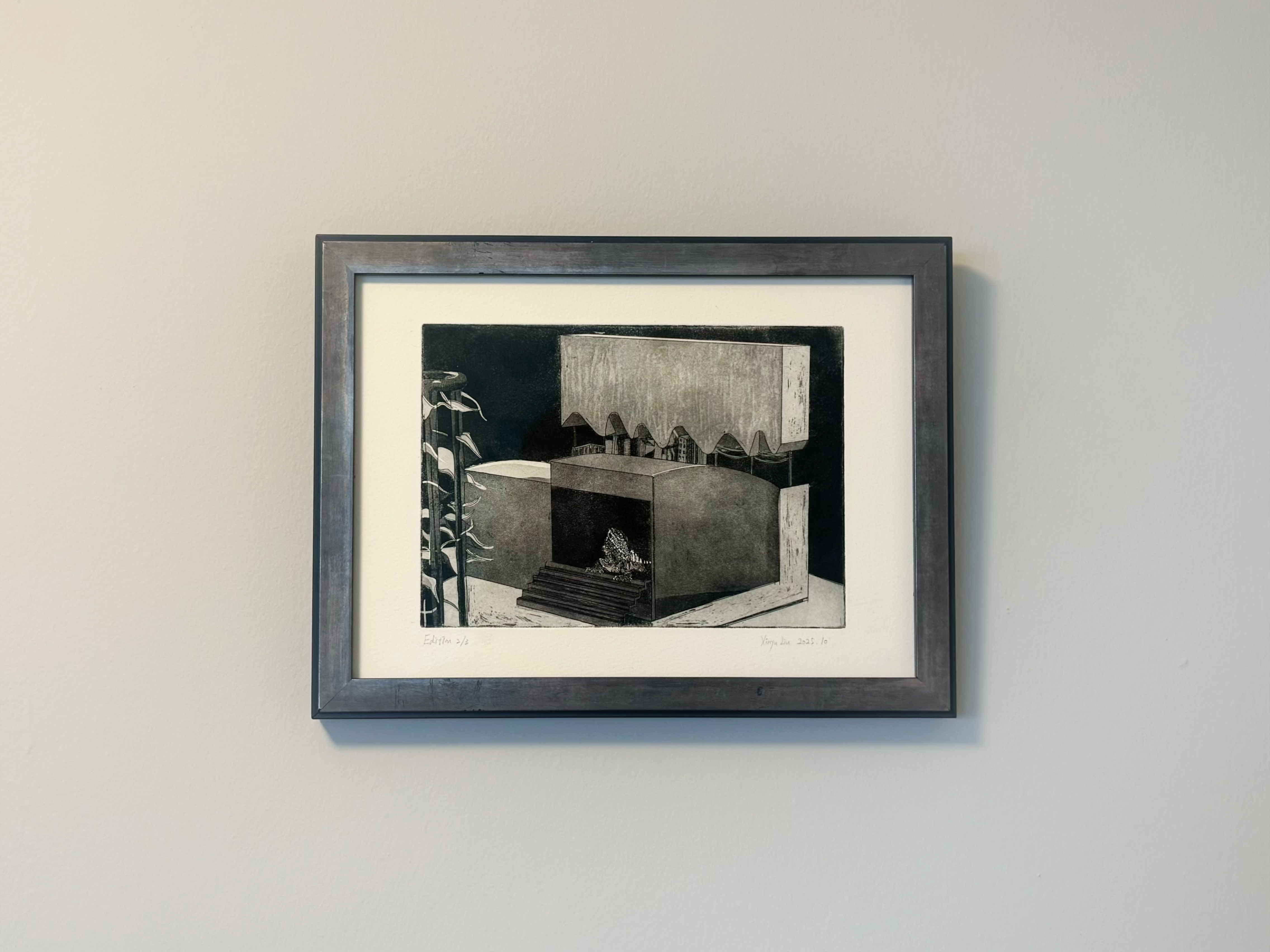
Small, Still - Gecko
Copper Plate Etching on Paper
9'' x 12''
2025
Do you mind if viewers interpret your work differently from your original intention? In your opinion, does the artwork belong to the audience once it is completed?
I do not mind if viewers interpret my work differently from what I originally intended. I actually think that openness is important. Once a work is completed, it starts to live beyond me, and viewers naturally bring their own experiences to it. At the same time, I still hope that the core tension or emotional atmosphere of the work remains present. So for me, the work does not belong only to the artist once it is finished, but it also does not become completely detached from where it came from.
< Back
05
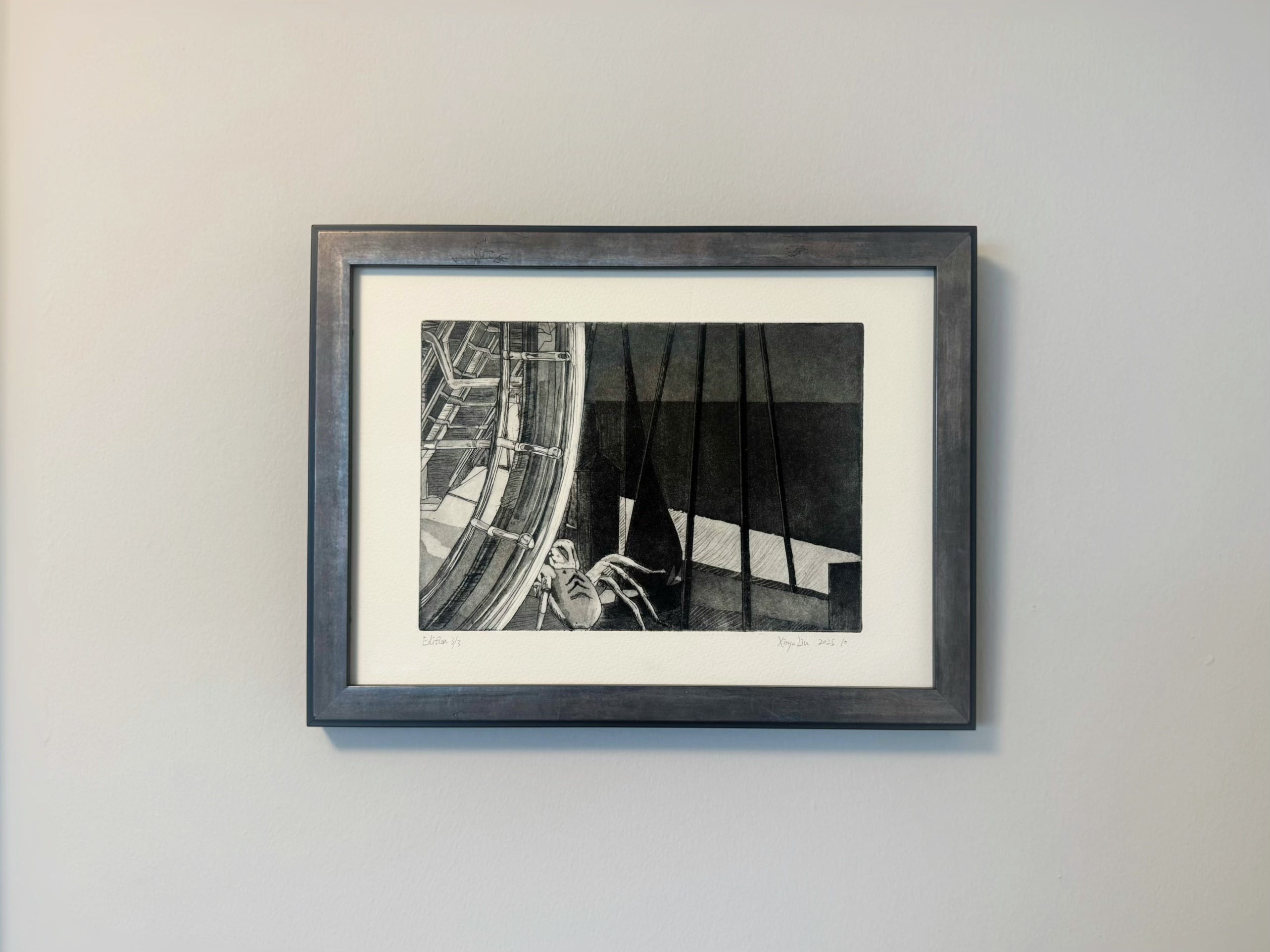
Small, Still -Spider
Copper Plate Etching on Paper
9'' x 12''
2025
For those who have never experienced your work before, what do you most hope they see or feel? and why?
I hope viewers do not feel the need to understand the work immediately. More than a clear explanation, I hope they first sense something emotionally or psychologically, something unstable, suspended, or caught between the familiar and the unfamiliar.

My work often deals with time, migration, and emotional transition, so I hope people enter it first through feeling, through space, material, rhythm, or atmosphere. If the work leaves them with a sense of tension, disorientation, or quiet recognition, then it has done something meaningful.
< Back
06
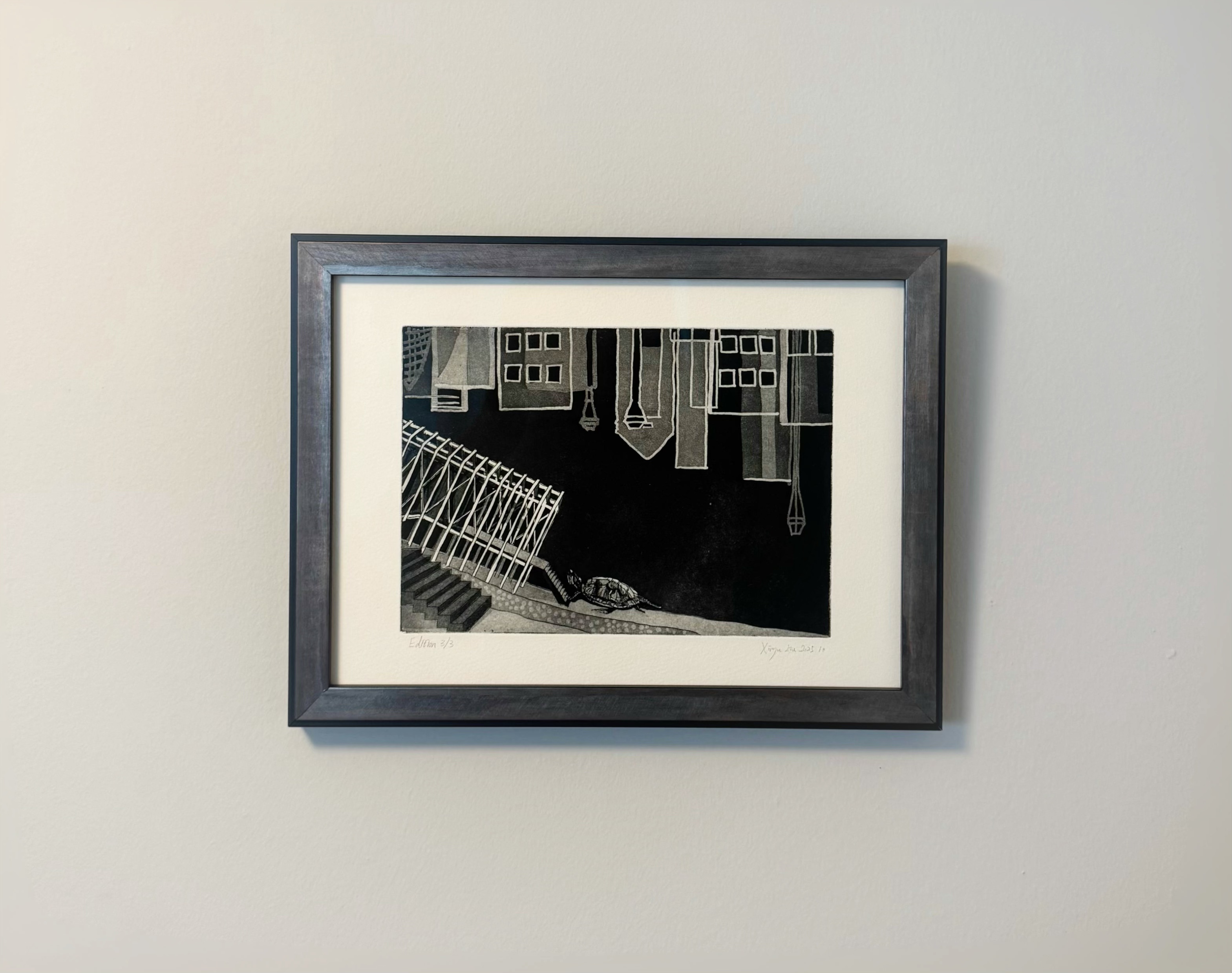
Small,Still-Turtle
Copper Plate Etching on Paper
9'' x 12''
2025
Have your personal life experiences, such as geography, culture, family, or education, influenced your practice? Could you share an example?
Yes, definitely. My background in product design has influenced the way I work with materials quite a lot. I think it gave me a strong sense of method and structure, but it also made me realize that I sometimes depend too much on design logic when making art. In some cases, I become too cautious with materials and not bold enough to experiment.

At the same time, my two years of studying abroad have had a major impact on how I think conceptually. For me, that experience felt like an escape from the more traditional East Asian timeline of life. It made me question the idea of time as something fixed, linear, or universal. Since then, I have become increasingly interested in time as something unstable, flexible, and even nonexistent in the way we usually imagine it. That has deeply shaped the emotional and conceptual direction of my work.
< Back
07
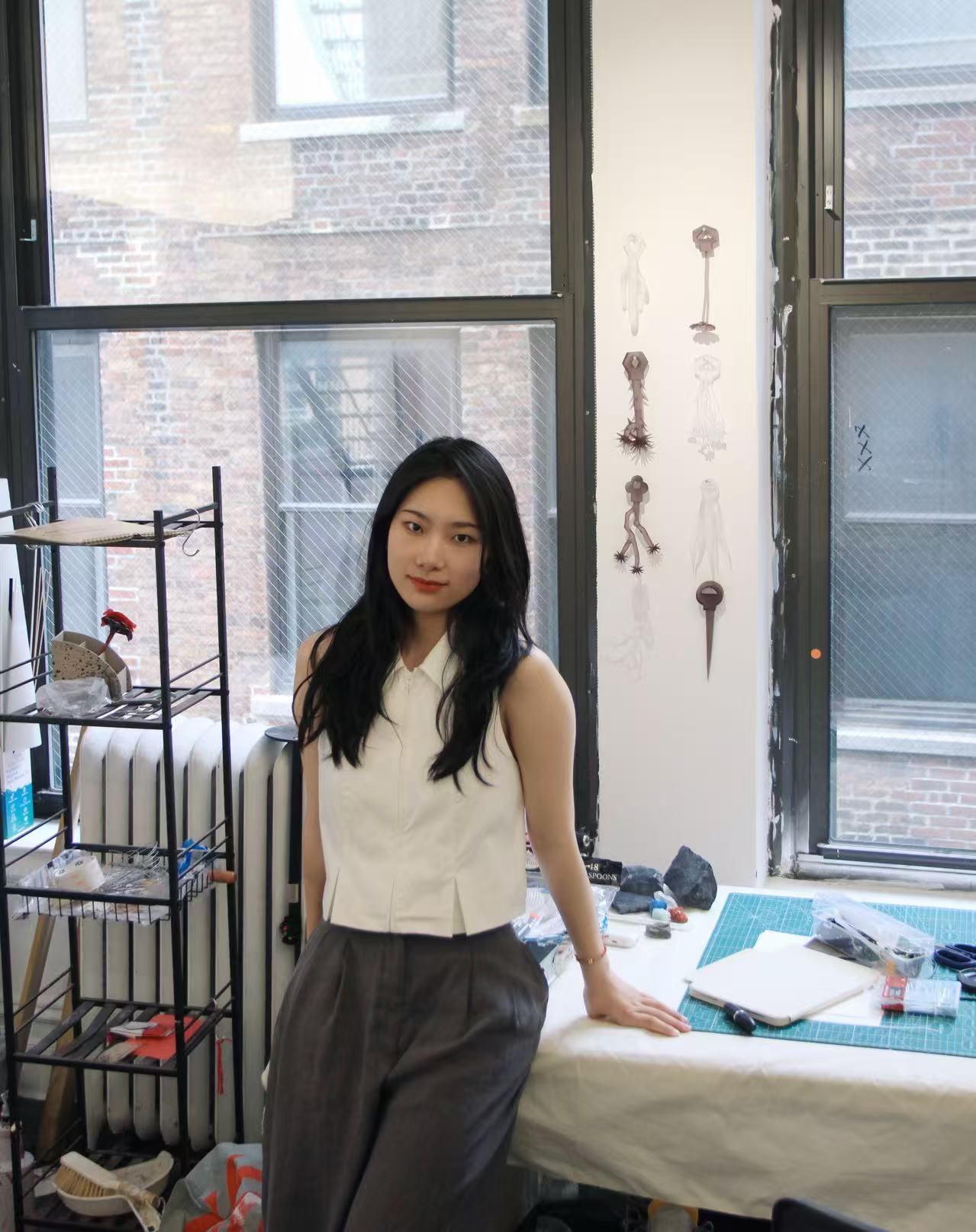
Artist portrait
If you had unlimited time and resources, what project would you most want to realize? What would it mean to you?
I think I would first want to deal with the exploitation behind artistic labor and the survival conditions of artists. For me, it is hard to talk about art without talking about how artists actually live and work. Ideally, I would want every artist and art worker to be able to create in a safe, healthy, and respectful environment.

I have imagined things like starting a grant, giving $1,000 each month to three artists, and organizing a group show every quarter. I have also thought about creating some kind of organization that could help artists claim unpaid fees and protect them from being taken advantage of by galleries or institutions. Maybe it sounds far away, but to me, it would mean building a structure of care and protection around artistic practice, not just celebrating the final work.
< Back
08
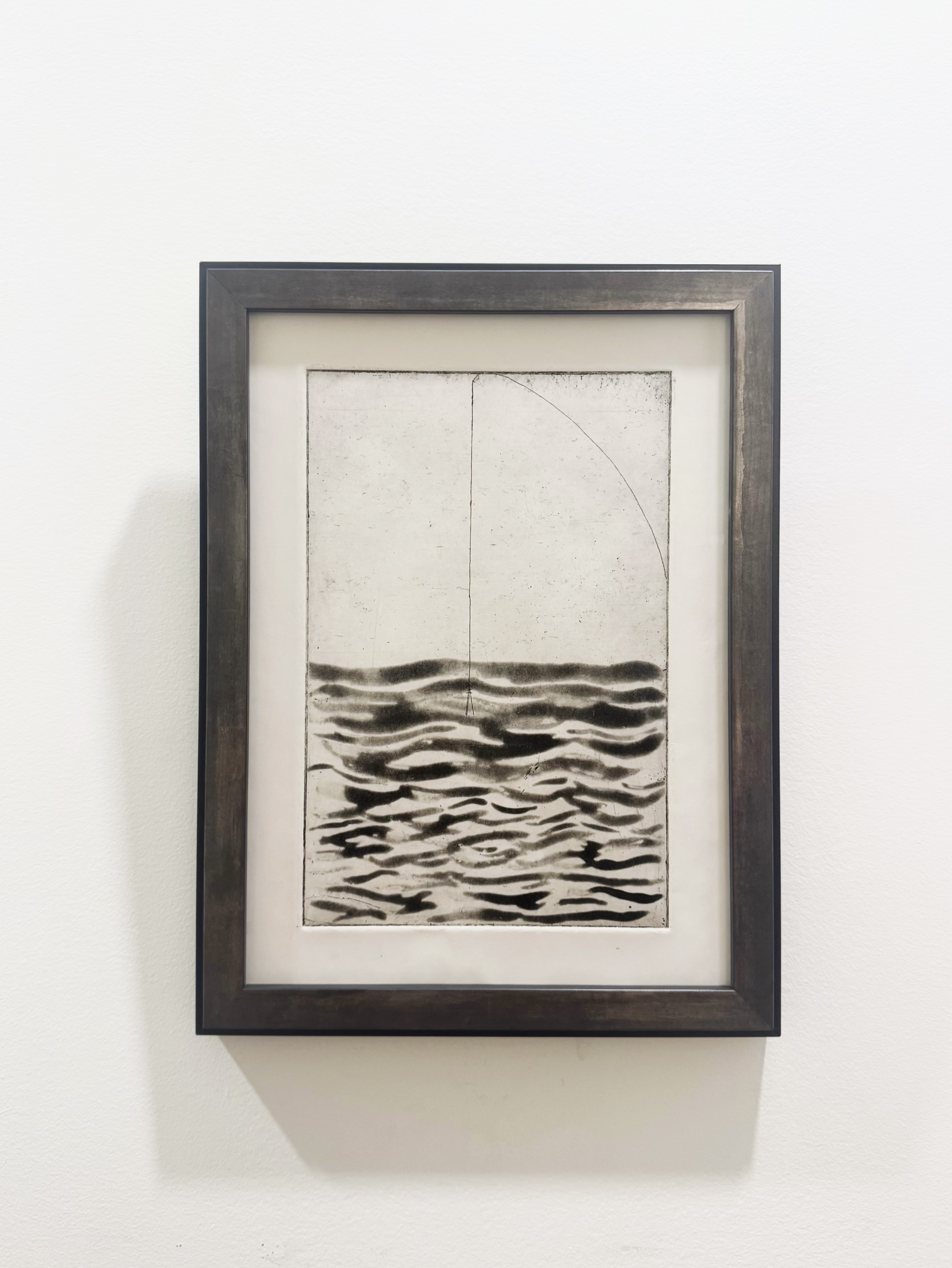
The Edge of Perhaps
Copper Plate Etching on Paper
9'' x 12''
2025
Your concept of art highlights the tension between cultural identity and legal status. What first led you to focus on this misalignment, and how has it shaped the way you think about transnational movement, belonging, and the instability of the self?
I realized that although I could cross national borders quite quickly, my sense of belonging, cultural identity, and understanding of self did not move at the same pace. The body may enter a new environment, while emotions, memories, and inner structures remain elsewhere. Through this asynchrony, I came to see that cultural identity and legal status are not the same, and can often exist in tension.

For me, transnational movement is never simply a passage from one place to another. It can leave a person in a prolonged state of suspension, constantly shifting between languages, systems, social norms, and emotional realities. In that process, the self becomes less stable, and belonging becomes something continuously negotiated rather than a fixed destination.
< Back
09
Waiting Is a Frenzy
Photograph
22.5’' x 16.5’'
2024
In works such as Fool’s Hour and Waiting Is a Frenzy, your ideas often take on very clear and recognizable visual forms.
How do you move from philosophical or research-based questions into these concrete images?
Is this clarity something you intentionally maintain, and do you see your design background playing a role in that process?
My design background definitely plays a role in that process. It helps me translate abstract questions into clearer visual structures. I usually do not begin with a fully formed image, but with a question or a vague feeling. As I build the image, certain forms and related elements gradually enter the work and make the idea more concrete.

So this clarity is not always something I intentionally maintain. It often comes more subconsciously, as part of how I construct an image. At the same time, I am aware that it can also become a limitation. While it helps me give shape to complex ideas, it can sometimes make me rely too much on control or recognizability. In that sense, my design background is both a support and something I continue to question.
< Back
10
Fool's Hour
Acrylic, motor
43 in. diameter
2025
Your work challenges linear ideas of time and instead approaches time as something cyclical, shared, and collectively experienced.
How do you materialize that idea through video, sculpture, or installation?
How do you decide what formal or spatial conditions can best hold that temporal complexity?
I often use cyclical structures, repetition, delay, pause, or dysfunctional timekeeping devices to approach non-linear time. For me, time is not just something measured, but something felt through the body, emotion, and environment.

Different mediums hold this differently: video works with flow and psychological time, sculpture condenses time into physical form, and installation allows viewers to enter states of waiting, suspension, or repetition through space.

When deciding on form, I do not usually start with the medium itself. I start by asking whether the idea needs to be seen, entered, or experienced.
Brooklyn, NY
Menu
Contact us
Newsletter
Thank you! Your submission has been received!
Oops! Something went wrong while submitting the form.
© 2025 Rexhibit. All rights reserved.
Contact us
Newsletter
Thank you! Your submission has been received!
Oops! Something went wrong while submitting the form.
© 2025 Rexhibit. All rights reserved.