For the best experience, please rotate your phone or switch to a larger screen.

We're currently optimizing this section for mobile — improved viewing will be available in future updates.

Karma(Jiao) Zheng
Interview
< Back
Bio   +
Contact   +
01Was there a defining moment or specific event that made you seriously think about the meaning of making art?
02How do you balance rational thinking and intuitive expression in your creative process?
06Have your personal life experiences, such as geography, culture, family, or education,influenced your practice? Could you share an example?
07If you had unlimited time and resources, what project would you most want to realize?What would it mean to you?
09In your works we often see the juxtaposition of soft and hard materials such as fibers, PVC, acrylic and metals. How do you understand the “language” of materials themselves? In your view, are they primarily symbolic, or do they possess a vitality that goes beyond representation?
03When you encounter material limitations or technical challenges, how do you usually respond or adapt?
04Do you mind if viewers interpret your work differently from your original intention? In your opinion, does the artwork belong to the audience once it is completed?
05For those who have never experienced your work before, what do you most hope they see or feel? and why?
08From your perspective, artists often carry a strong sense of responsibility toward social and human issues. What do you believe artists can contribute to the development of society, and how powerful can their social influence truly be?
10Your practice began with self-healing and emotional expression but later expanded to themes like environment and gender. How do you see the connection between personal emotional experience and broader social narratives?
< Back
01
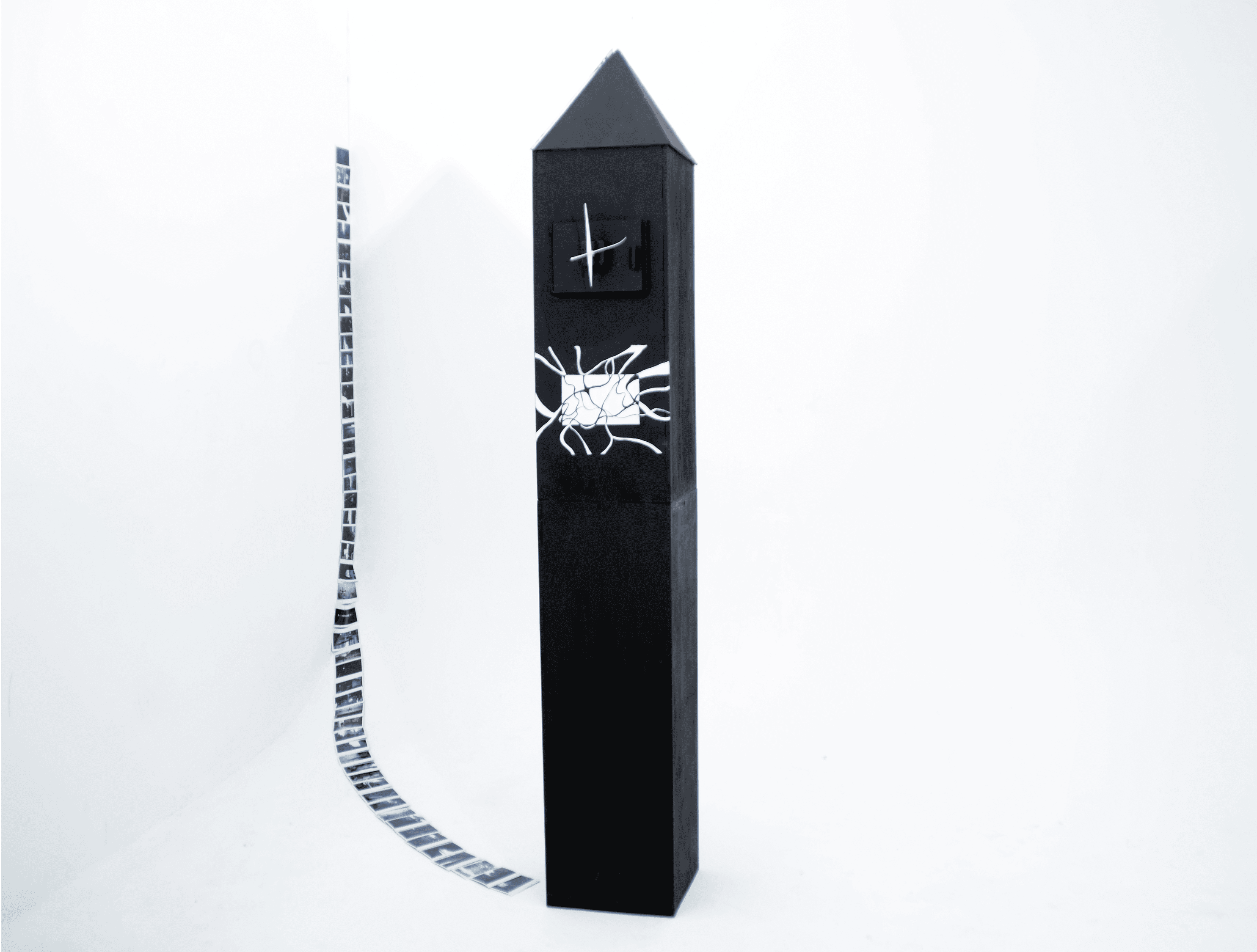
Urban Labyrinth
Wood, metal, and polaroid cameras
78.7 × 11.8 × 11.8in
2024
Was there a defining moment or specific event that made you seriously think about themeaning of making art?
It happened after saying goodbye to someone very important to me. During that time, I suddenly realized there were so many details in my life that I’d never really paid attention to. I tend to look back a lot, but I also forget small fragments. Sometimes it’s a sound or an object that brings them back.

That’s when I started thinking maybe I could use art to hold onto those moments. When I look at my works now, those emotions come back to me.

For me, making art is about recording. It’s not for others. It’s a very private act, a way to remember the feelings I don’t want to lose.
< Back
02
Co-Dependency
PVC, recycled plastic water bottles, acrylic, acrylic paint, color essence
70.9 in × 70.9 in × 39.4 in
2024
How do you balance rational thinking and intuitive expression in your creative process?
Honestly, I don’t rely much on logic or strict planning. My process is very intuitive. I’ve never been a patient person; I can’t spend too long sketching or mapping things out. I believe that each work has its own life. It tells me what it wants to become.Even if I start with one idea, the final outcome often turns out completely different. I actually enjoy that kind of “drift” because it feels more organic, more truthful.
< Back
03
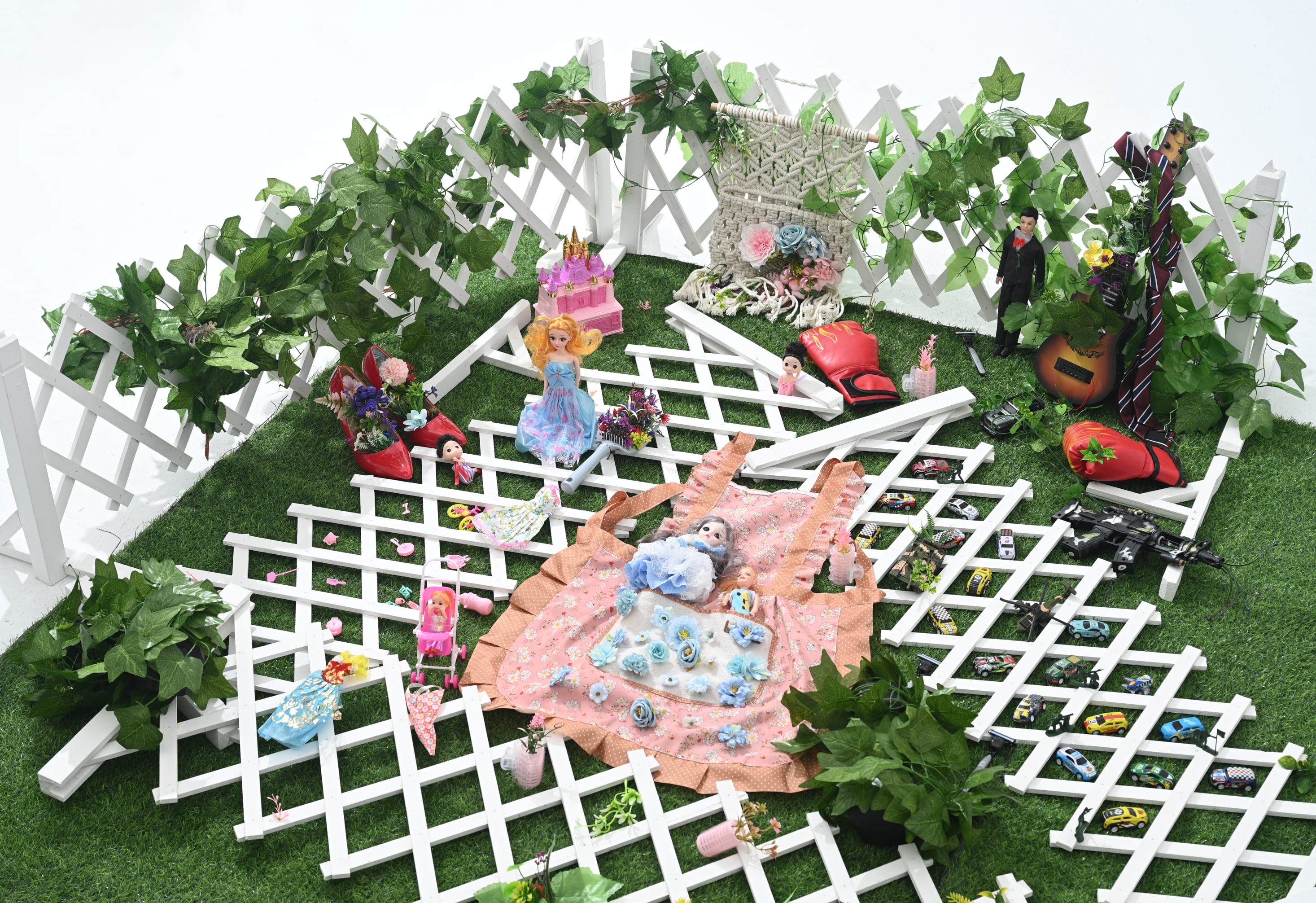
Eden of Gender
Wood, toys, turf
59.1 × 78.7 × 11.8in
2024
When you encounter material limitations or technical challenges, how do you usually respond or adapt?
I see limitations as a kind of conversation. For example, when I work on projects related to the environment, I often use everyday materials. Sometimes they resist my control. Maybe the texture doesn’t behave the way I expect. But that resistance pushes me to adjust and experiment.

These moments of frustration often lead to discoveries. Limitations force me to stay flexible and open, and that’s where new possibilities emerge.
< Back
04
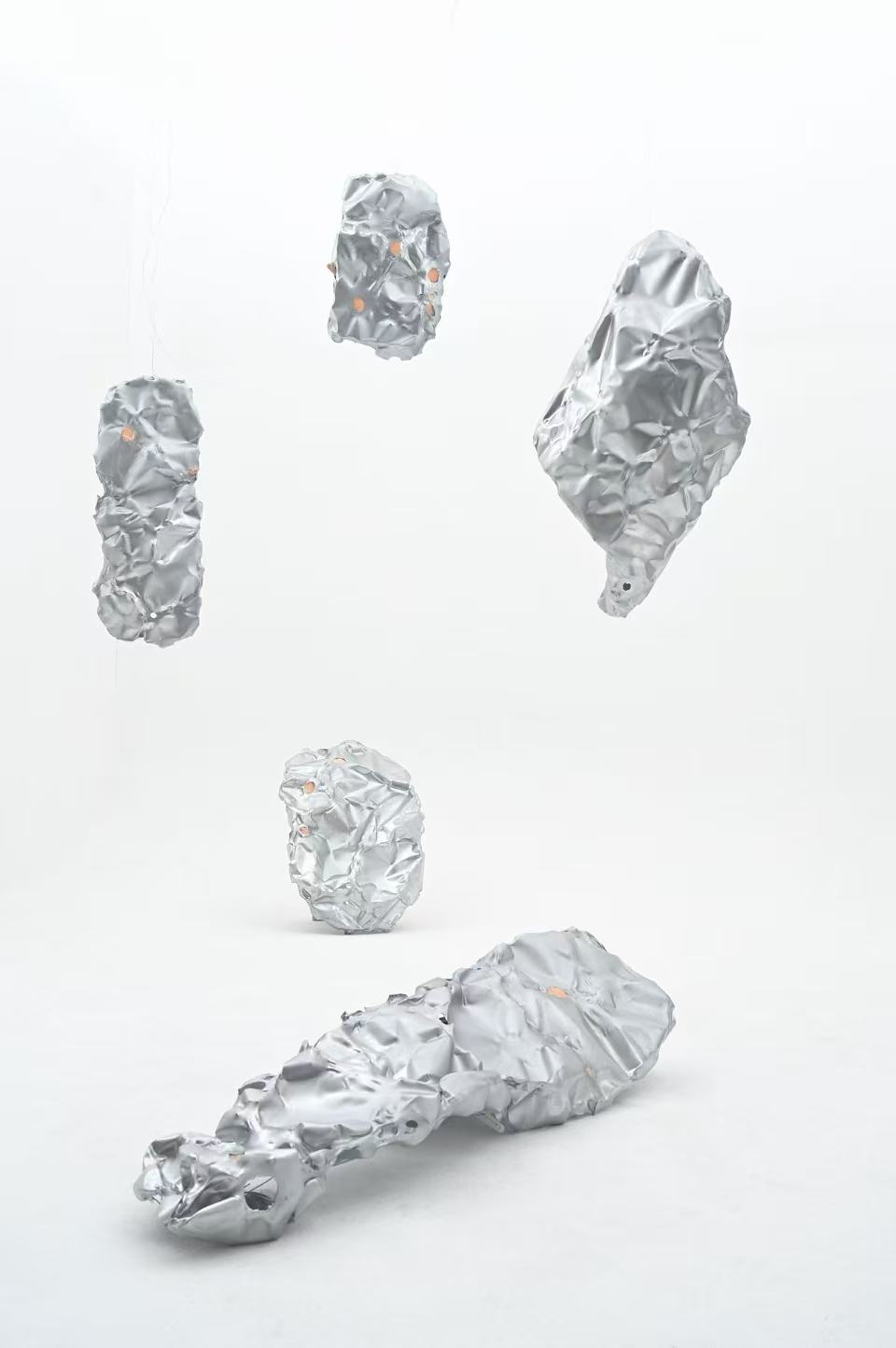
Untitled
Iron wire, heat shrink film, metal paint, silicone
23.6 × 11.8 × 7.87 in, 59.1 × 7.87 × 9.84 in
2024
Do you mind if viewers interpret your work differently from your original intention? In your opinion, does the artwork belong to the audience once it is completed?
Not at all! I actually love that. As the saying goes, “a thousand people, a thousand Hamlets.” I feel honored when people bring their own perspectives to my work. Yes, my pieces are rooted in personal experiences and emotions, but once they leave me, they start to belong to others too. Viewers project their memories and feelings onto them. And that gives the work new life. I think my works belong to me, to the person I was thinking of when creating them, and to every viewer who encounters them.
< Back
04
T-axis: the entrance/clock of the ghost’s room
Sap of the lacquer tree, fake glit, brass, MDF, OHP film, spray paint, clock movements, resin and mixed media
114.2 x 35.4 x 23.6 inches, 290 x 90 x 60 cm
2022
Do you mind if viewers interpret your work differently from your original intention? In your opinion, does the artwork belong to the audience once it is completed?
My work is an epistemological exploration that often engages with myth, ritual, and systems of belief—so I consider different interpretations not only inevitable, but essential. Observing how viewers respond, especially when their reactions diverge based on personal backgrounds such as religious belief or cultural experience, allows me to understand how visual language resonates across boundaries. For instance, when a work draws from sacred spatial structures, those with religious affiliations often respond very differently from those without. I find these moments of contrast generative—they often inform the conceptual direction of future works.

Once the work is completed and presented in an exhibition, I see it as a shared encounter. The audience brings their own world to the work, just as I brought mine. Rather than believing that the artwork belongs solely to the artist or to the viewer, I see it as a site of exchange—where worlds overlap, interpretations multiply, and new meanings emerge through engagement.
< Back
05
Doppelganger & Dissocation

Installation View
2024
For those who have never experienced your work before, what do you most hope they see or feel? and why?
I hope they can feel the weight of emotion. It doesn’t have to match what I felt. It could be intimacy, loss, vulnerability, or separation. But I hope my work makes them pause and sense something beyond the surface. To me, each piece is an emotional record, holding my state of being at a certain moment. I want viewers to experience their own subtle emotions through it, to feel something real, even if it’s quiet or fragile.
< Back
06
Unable
Silicone, organza, needle, thread
Installation and Performance View
2024
Have your personal life experiences, such as geography, culture, family, or education, influenced your practice? Could you share an example?
Absolutely. I left home when I was sixteen and have been moving ever since—Sydney, D.C., Chicago, New York, Hong Kong, Beijing, Changsha… I rarely stay in one city for more than a year. Family, home, these words sometimes seem strange to me. I don’t really have a fixed sense of belonging, but that constant movement made me more sensitive and tolerate.

Many of my works deal with this feeling of “rootlessness”, floating, crossing, drifting. Also, my family’s background is completely different from art. My parents never understood my choice, and that tension actually pushed me to express myself even more. Art became the only way I could reconcile with myself.
< Back
07
Urban Labyrinth
Wood, metal, and polaroid cameras
78.7 × 11.8 × 11.8in
2024
If you had unlimited time and resources, what project would you most want to realize? What would it mean to you?
I would spend time living in different places around the world and create a series of works using materials, memories, and stories from each place.

For me, it’s not just about traveling, but about living in those environments, understanding their rhythm, their people, their emotions. Each place leaves a different mark, and I want to let those experiences shape the work naturally.

It would be a way of weaving together different cultures and moments of life, turning that process of living and moving into art itself. That process itself would be my way of existing, of connecting with the world. 
< Back
08
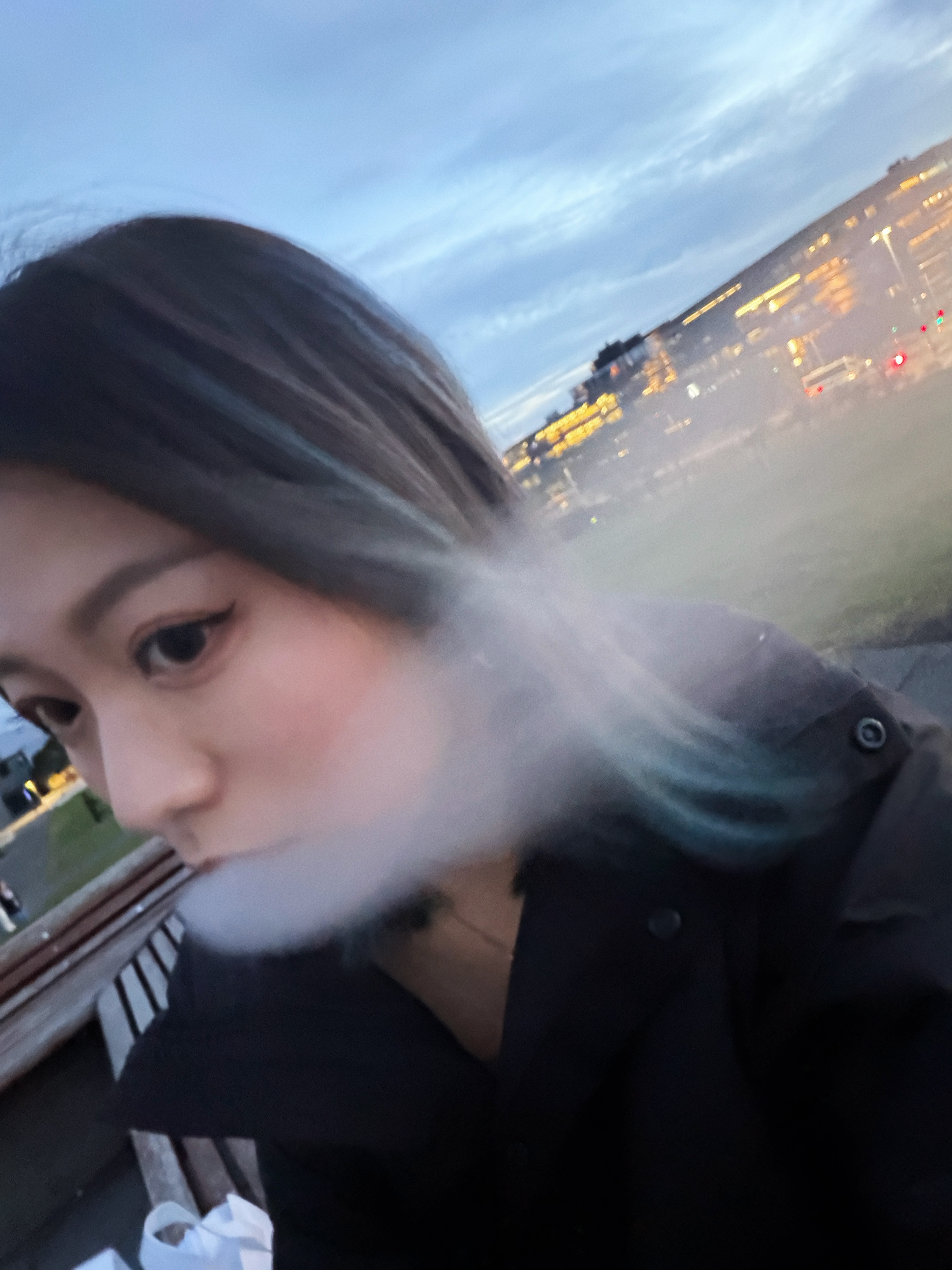
Artist Portrait
From your perspective, artists often carry a strong sense of responsibility toward social and human issues. What do you believe artists can contribute to the development of society, and how powerful can their social influence truly be?
I think an artist’s role isn’t to change things directly, but to offer new ways of seeing. Art can make people notice what’s usually invisible issues like gender, environment, or identity. I’m particularly drawn to what’s unseen or unheard, the people, emotions, and stories that often get overlooked. If my work can make someone pause and reflect, even for a moment, that’s already a form of impact.
< Back
09
Untitled
Iron wire, heat shrink film, metal paint, silicone
23.6 × 11.8 × 7.87 in, 59.1 × 7.87 × 9.84 in
2024
In your works we often see the juxtaposition of soft and hard materials such as fibers, PVC, acrylic and metals. How do you understand the “language” of materials themselves? In your view, are they primarily symbolic, or do they possess a vitality that goes beyond representation?
I believe materials have their own life. You can’t always force them into what you want. The softness of fiber and the coldness of metal, when combined, naturally create tension. PVC or recycled plastic carries environmental implications. They’re not just symbols; they hold traces of history.

My role is not to control them but to have a dialogue, to find what they want to become.
< Back
10
Eden of Gender
Wood, toys, turf
59.1 × 78.7 × 11.8in
2024
Your practice began with self-healing and emotional expression but later expanded tothemes like environment and gender. How do you see the connection between personalemotional experience and broader social narratives?
My works often start from something very personal—emotional healing, memories of intimacy. But over time, I realized these personal experiences are deeply connected to larger social issues.

For example, a past relationship that felt like a symbiotic bond made me think about the interdependence between humans and nature.

My friends’ struggles with gender identity reflect society’s pressure to fit binary norms. I want my work to open a space between the personal and the collective, where private emotions can mirror broader questions about who we are and how we coexist.
Brooklyn, NY
Menu
Contact us
Newsletter
Thank you! Your submission has been received!
Oops! Something went wrong while submitting the form.
© 2025 Rexhibit. All rights reserved.
Contact us
Newsletter
Thank you! Your submission has been received!
Oops! Something went wrong while submitting the form.
© 2025 Rexhibit. All rights reserved.