For the best experience, please rotate your phone or switch to a larger screen.

We're currently optimizing this section for mobile — improved viewing will be available in future updates.

Achyut Sharama
Interview
< Back
Bio   +
Contact   +
01 Was there a defining moment or specific event that made you seriously think about the meaning of making art?
02 How do you balance rational thinking and intuitive expression in your creative process?
07If you had unlimited time and resources, what project would you most want to realize?What would it mean to you?
08You often work with dots, lines, and geometric patterns. Are these simply visual elements for you, or do they hold a deeper meaning connected to meditation or a universal language across cultures?
09 Acrylic on canvas has become central to your practice. What made you choose this medium, and what possibilities does it offer that you do not find in other materials?
03When you encounter material limitations or technical challenges, how do you usually respond or adapt?
04Do you mind if viewers interpret your work differently from your original intention? In your opinion, does the artwork belong to the audience once it is completed?
05For those who have never experienced your work before, what do you most hope they see or feel? and why?
06 Have your personal life experiences, such as geography, culture, family, or education, influenced your practice? Could you share an example?
10Being self-taught, you have followed your own path of learning. How has this shaped your artistic journey in terms of both the freedom it gives and the challenges it brings?
< Back
01
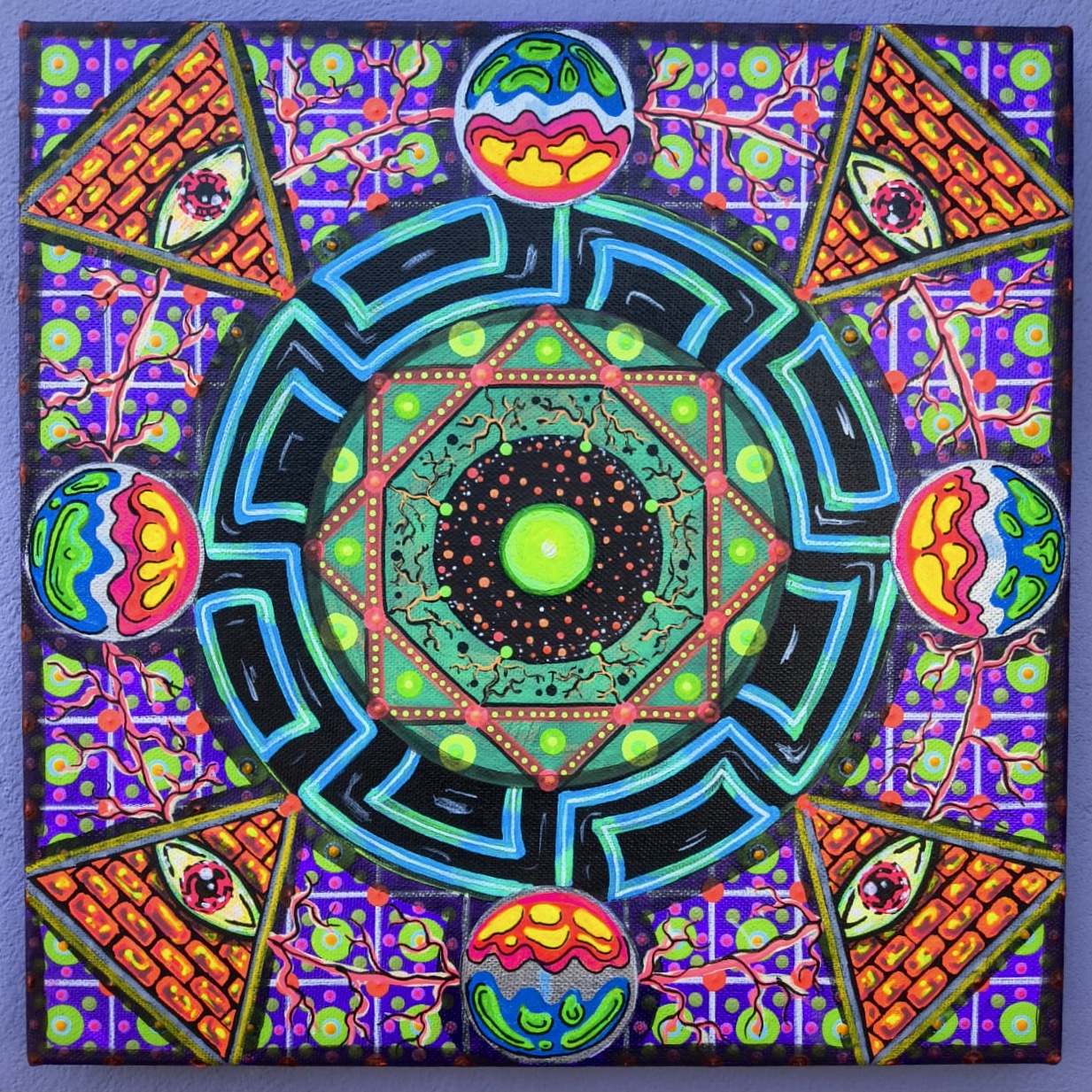
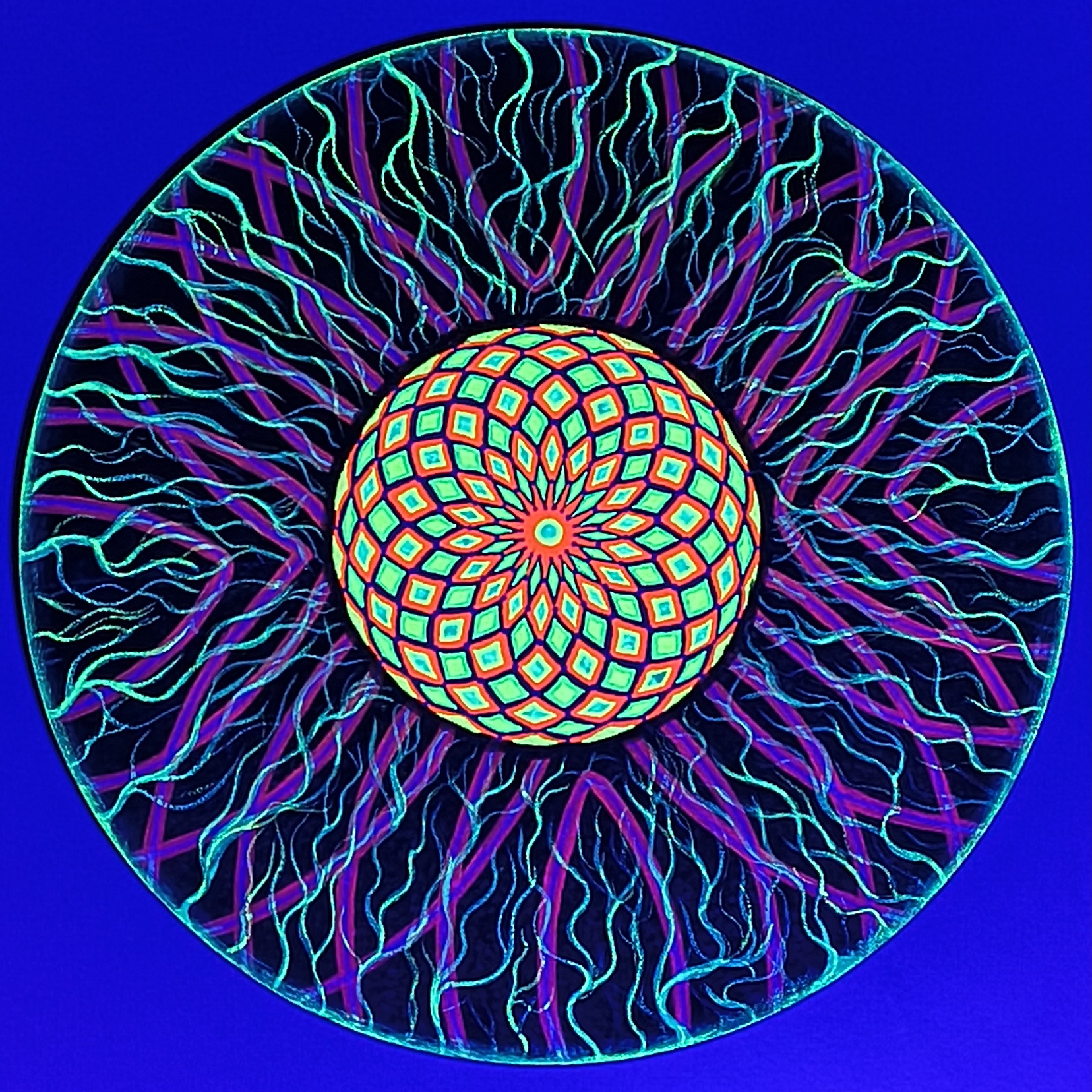
The Portal
Acrylic on canvas
30 x 30 inch
2024
Was there a defining moment or specific event that made you seriously think about the meaning of making art?
As long as I can remember, I was a creative child. I loved working with different material sand making things, but I never imagined I would become a full-time artist. The real shift didn’t happen in a single moment, but during a very challenging phase of my life when I was struggling with substance use disorder. Until then, most of my art was replication copying things or making what everyone else was making. During that phase, art became something much more meaningful: a healing practice and a way to process what I was going through. That experience gave me a new understanding of why I make art. Since then, my work has evolved through experimentation, failure, and consistency, and I see art less as producing images and more as a way of connecting with myself and moving forward.
< Back
02
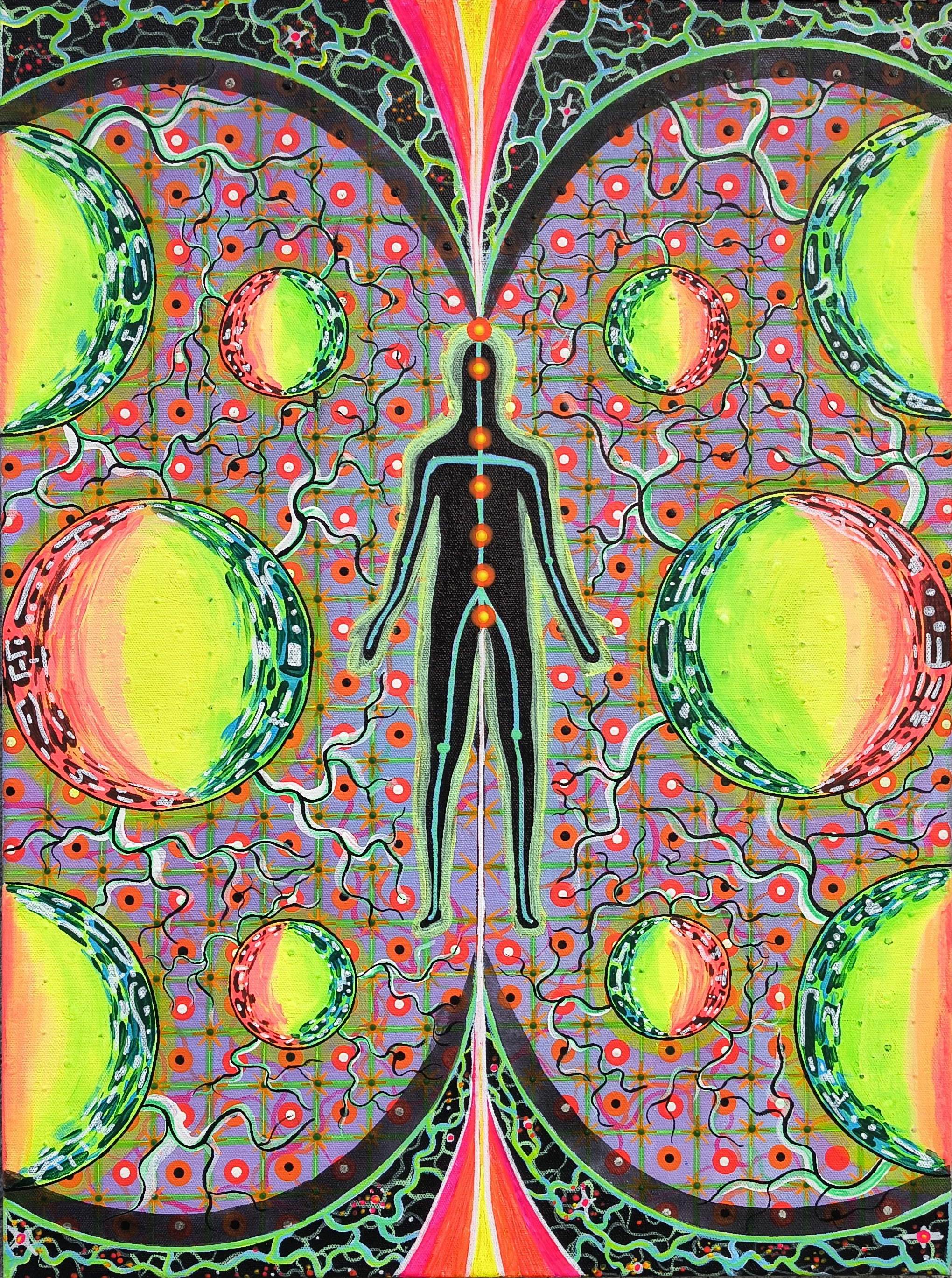
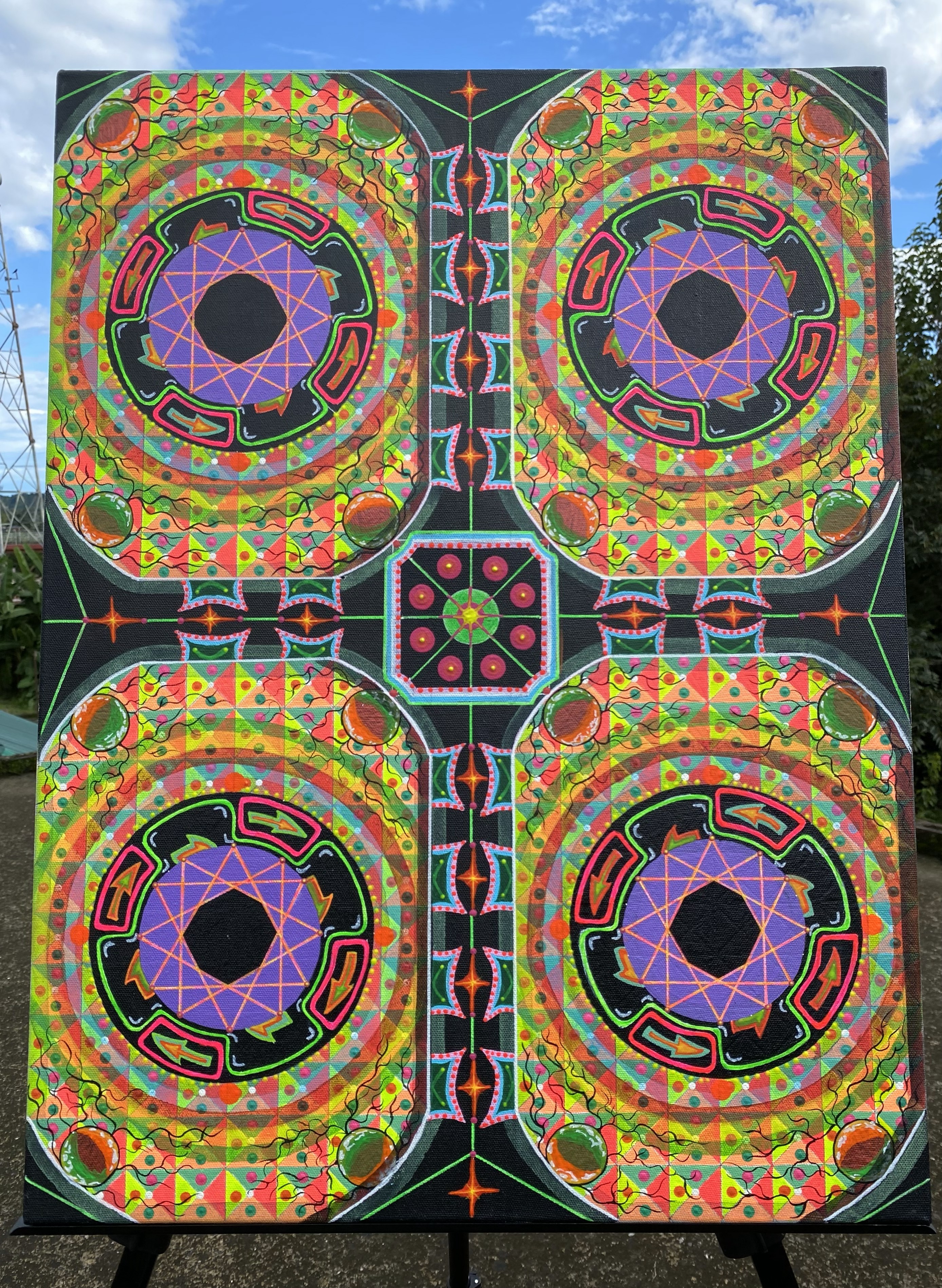
Cosmic Vessel.
Acrylic on canvas
24  x 18 inches
2025
How do you balance rational thinking and intuitive expression in your creative process?
Most of my works aren’t fully planned beforehand I usually start directly and let intuition guide me. The only thing I decide early on is the color palette, right after the initial sketch and ideation. Because a lot of my art involves geometry and patterns, there’s always a precise side to it, but I balance that with more free-flowing elements.

I try not to be rigid with my process. What I imagine at the beginning often changes completely by the end. With works like sacred geometry, I do follow certain rules, but once the structure is in place, I let the flow take over. In the end, I lean more toward freedom and intuition I enjoy when the process itself leads me somewhere unexpected.
< Back
03
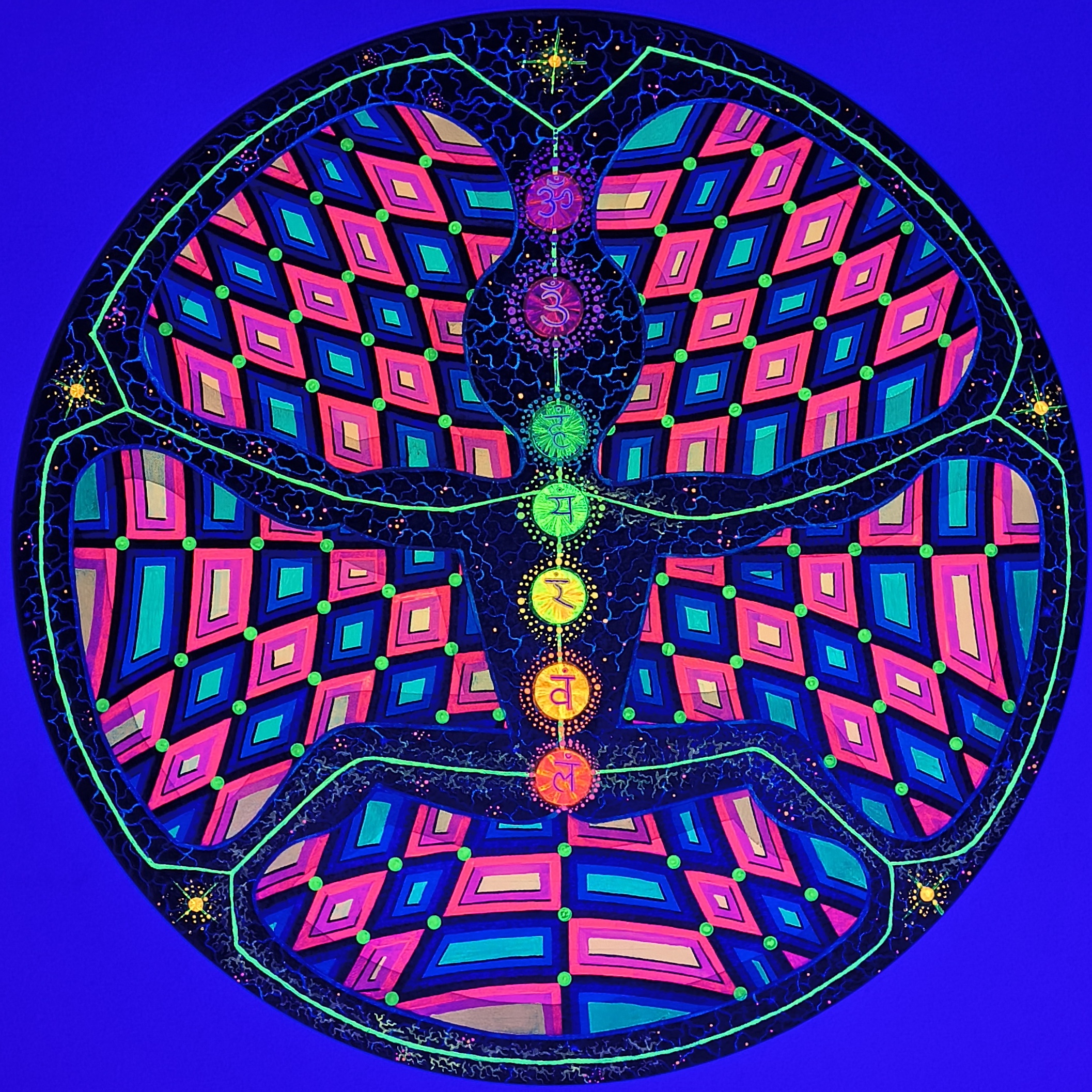
The Yogi
Acrylic on canvas
30 x 30 inches
2024
When you encounter material limitations or technical challenges, how do you usually respond or adapt?
Yes, I face material limitations since art supplies are not always easy to find where I live. I often improvise, experiment with substitutes, or use whatever is available. For example, in my early days I didn’t have a UV light, so I used a simple one-dollar blue bulb to get a similar effect. It wasn’t the same, but it worked for a while until I could finally buy a proper UV light after more than a year.

Because my work is geometric, precision is important, but my background in science and math helps me deal with those challenges. My friends and family also support me with ideation and design whenever I face obstacles, which makes the process easier and more enjoyable. I like to experiment and don’t fear mistakes. Limitations don’t stop me they often push me to be more flexible and creative .
< Back
04
Alternate Realities
Acrylic on canvas
24 inches x 18 inches
2025
Do you mind if viewers interpret your work differently from your original intention? In your opinion, does the artwork belong to the audience once it is completed?
Yes, I actually love it when people see meanings in my artwork that I didn’t put there. Most of the time I don’t even share my thought process, because I don’t want to give viewers a fixed way of looking at it I want them to explore it on their own.

For me, once the piece is finished, it becomes part of the audience’s experience. My focus is more on the process of creating. It’s not important that people understand my original idea I even prefer leaving my works without titles or descriptions so they stay open to interpretation. Sometimes people share their own perspectives and it surprises me, because it helps me see my own work in anew light.
< Back
05
Atomic Fusion
Acrylic on canvas
30 x 30 inches
2025
For those who have never experienced your work before, what do you most hope they see or feel? and why?
When someone sees my artwork, I hope it evokes a feeling of wonder and energy. I want viewers to feel a personal connection to the work, but also a connection to the universal or spiritual energy behind it.

Since my work is meditative and healing, I hope it brings a sense of peace, mindfulness, and flow. I also hope it sparks thought, imagination, and self-reflection, and inspires people in a positive way.
< Back
06
Cosmic Drama
Acrylic on canvas
24  x 16 inches
2024
Have your personal life experiences, such as geography, culture, family, or education, influenced your practice? Could you share an example?
Yes, growing up in rural India (Himachal Pradesh) surrounded by mountains and nature has shaped my art style a lot. I come from a small village where life is calm and grounded, and that sense of peace and connection to nature has been a constant inspiration in my work.

Culturally, this place is a mix of Hindu and Buddhist traditions, and both have influenced me deeply. My family has also been spiritual, so those ideas were always around me. At the same time, I studied in a Catholic convent school, so I was exposed to very different perspectives. Later, science and math gave me the language to express some of those spiritual ideas, especially through geometry and patterns.

There were also challenges. Art supplies were not always available, and art itself was not really valued in my community most people expected me to follow a regular career path. But I chose art anyway. About five years ago, during a very difficult phase in my life, I turned to art as a form of therapy. That’s when I started with dot art, and from there I began to see how small elements can come together to form something much bigger. That experience still shapes the way I create today.
< Back
07
Field of Consciousness
Acrylic on canvas
36 in × 36 inches
2024
If you had unlimited time and resources, what project would you most want to realize? What would it mean to you?
If I had unlimited time and resources, I would create a space dedicated to art that is open to everyone - a place where people can practice art as a way to heal themselves and truly connect with their creative side.

The project would explore themes of spirituality, cosmic energy, meditation, universal connection, and healing. I would want people to experience the space and see how art can positively change their lives and help them feel part of something bigger than themselves.

I would collaborate with other artists, scientists, communities, and volunteers to create a sustainable space focused on art, healing, mindfulness, and flow. Coming from a place where art isn’t always valued, this project would represent not just me, but all artists, and provide support and recognition to anyone pursuing this path. I hope it would leave a lasting impact, raise awareness, and be something bigger than myself for the people around me.
< Back
08
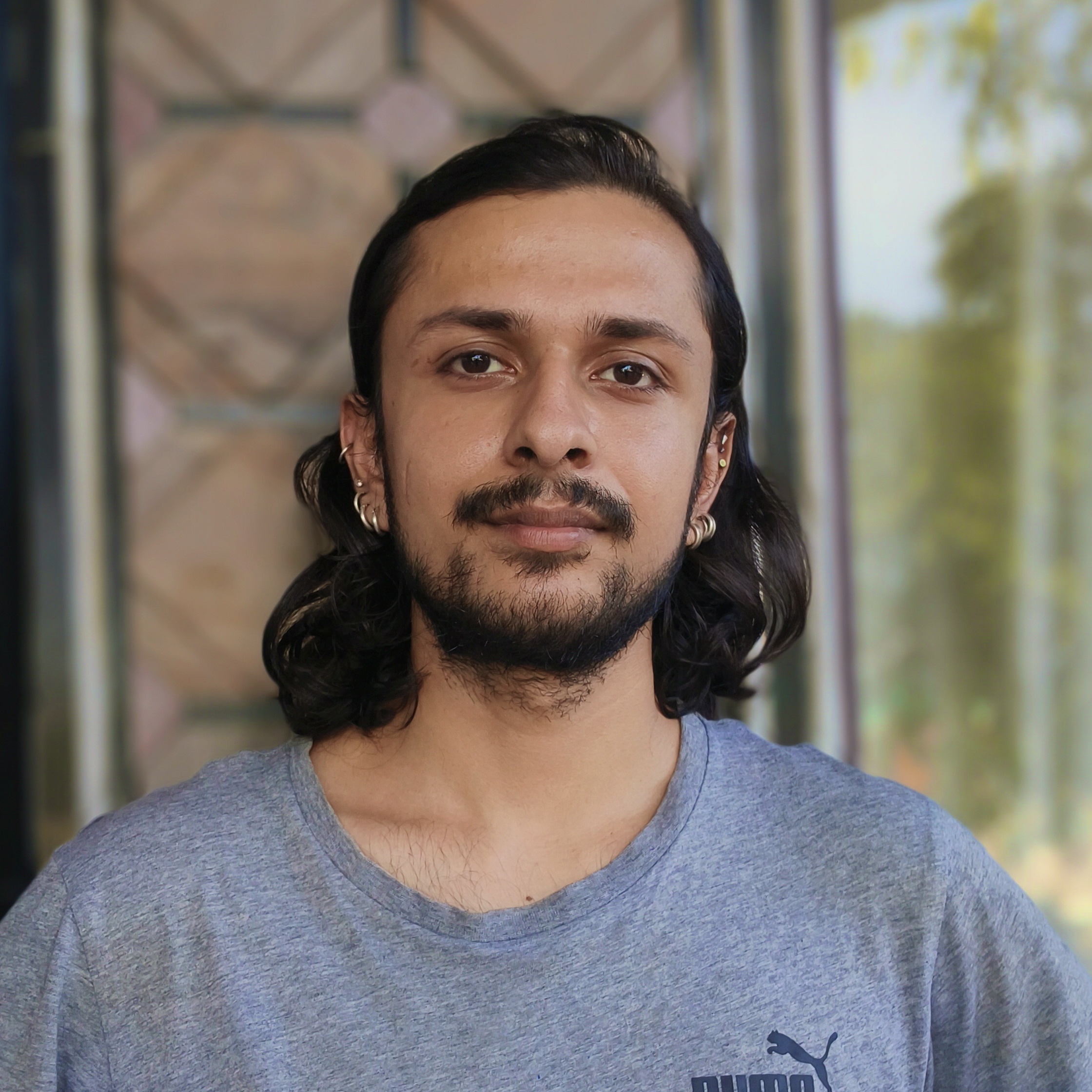
Artist portrait
You often work with dots, lines, and geometric patterns. Are these simply visual elements for you, or do they hold a deeper meaning connected to meditation or a universal language across cultures?
Dots, lines, and geometric patterns hold a deep meaning for me. Everything started from the dots. Dots come together to form lines, lines create shapes, and shapes form larger patterns. That how my art journey has come together after a tough time. It’s about harmony, rhythm, balance, and proportions all these elements coming together to create the art work.

For me, creating art is about the process, healing, and meditation, not the final product. It brings me into a deep flow state. I also see these patterns as a universal language. Geometry has always been apart of cultures around the world, and we can see it everywhere in nature. In a way, it feels like the code of the universe.

My work is inspired by sacred geometry, spiritual beliefs, chakras, yantras, and concepts like the golden ratio and Fibonacci sequence. When I work with rules or patterns, I focus on the intent rather than just aesthetics. I don’t start by thinking about meaning; I let the composition and the process guide me. Dot art started as experimentation for me. I wasn’t good at replication, so I used dots as a medium, and over time they came together to create bigger, more complex artworks.
< Back
09
Process photograph of the artist working outdoors
Acrylic on canvas has become central to your practice. What made you choose this medium, and what possibilities does it offer that you do not find in other materials?
I have worked with many different kinds of mediums, but I chose acrylic on canvas because it is accessible, versatile, and has a smooth finish, which is very important for geometric art. I usually apply thick layers of paint, which gives texture and a three-dimensional feel to the dots and patterns.

Acrylic on canvas also allows me to work on larger pieces and create custom sizes. The paint dries quickly, which helps with layering, mixing, and experimenting without long waiting times. It’s also easier to preserve compared to some other mediums.

I’ve experimented with clay, glass, and other surfaces, but canvas and acrylic feel natural for me. It’s the medium that enables my artistic expression and allows me to explore both precision and flow in my work.
< Back
10
Process photograph of the artist working outdoors
Being self-taught, you have followed your own path of learning. How has this shaped your artistic journey in terms of both the freedom it gives and the challenges it brings?
Being a self-taught artist has been one of the best things for me because all my ideas and technique shave come from my own exploration, without any constraints or rules from the art world. It’s allowed me to focus on pure expression and authenticity.

Teaching myself gives me the freedom to experiment, take risks, and make mistakes. The absence of external rules or judgments has been instrumental and that freedom has been key in developing my own style. Of course, there have been challenges, like learning techniques, understanding materials, or studying art theory, but over time I’ve developed my own ways of working that are unique to me. Sometimes my process takes longer or is more complex, but I enjoy it.

I continue to educate myself through books, online resources, observing other artists, and lots of trial and error. Failing is part of the process, but consistency is what helps me grow. Being self-taught has definitely helped me create a style that is authentic and different from formally trained artists. Coming from a place where art is not always supported, my motivation has often come from online appreciation, friends, and family who encourage me to keep going.
Brooklyn, NY
Menu
Contact us
Newsletter
Thank you! Your submission has been received!
Oops! Something went wrong while submitting the form.
© 2025 Rexhibit. All rights reserved.
Contact us
Newsletter
Thank you! Your submission has been received!
Oops! Something went wrong while submitting the form.
© 2025 Rexhibit. All rights reserved.